Home
Home
 About Us


New instruments of protection
02/03/2009 12:00
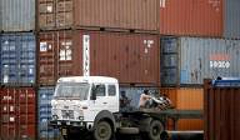
US recession spread with unusual speed to many other countries with consequent fall in exports, industrial production and employment. This has aroused fears about the use of protectionist measures to conserve demand and promote growth.
President Bush was among the first few leaders to anticipate this outcome and had called a meeting in December to persuade major countries to ensure free trade.
It is not easy for countries to support ideologies and suffer fall in incomes and drop in jobs. The temptation to go protectionist becomes irresistible though it may take different forms. Tariff which was the first option in the 1930’s has fallen out of favour because countries will have to go back on their international commitments, though some deviations did take place in Russia, India and Vietnam. But there are a number of other options that can achieve the same result.
The other conventional option is export rebates and subsidies. China, it is reported, has announced higher export rebates on 3700 items. Also health and safety standards, environment, apart from anti-dumping duties, have been used in recent past to keep imports out.
In the last two months new strategies have emerged in US and Europe to protect domestic industry and employment. To salvage the financial system and the vulnerable sections of industry and take the economies out of recession they have extended huge bailouts and stimulus packages. These have turned into handy instrument to provide protection.
There are four different options. First, US, for instance, has offered bailout to car industry in Detroit which will help the manufacturers to survive competition from imports. France has offered 6.5 billion francs to repatriate car production from Central Europe back to France, putting the very foundation of the European Union into danger.
Second, projects financed from the $787 billion stimulus package will require that the inputs are manufactured in the US. The Homeland Security uniforms, for instance, have to be made from US fabrics; infrastructure projects can be set up only with US steel; and so on. Similarly, in UK the 37 billion pound life line is only for British businesses. These conditions discourage outsourcing of products.
Third, the companies that receive Government assistance are required not to employ foreigners. To qualify for bailout, companies in US cannot employ foreigners who carry H1B visa. The ‘British jobs for British workers’ has already restricted entry of a number of foreigners. These measures will discourage outsourcing of services.
Fourth, the “Buy American” campaign that discriminates against all imports, if pursued, will find acceptance among many more countries. ‘Buy Local’ policy will shut out the domestic market for imports irrespective of price or quality.
Protectionism has thus taken different forms. Tariff is no longer preferred. The objective is however achieved in ways that do not contravene the WTO and yet give the same result. If these protectionist measures become common world trade will shrink much more than what the IMF has anticipated and, like in the thirties, turn recession into depression.
(D. H. Pai Panandiker is the President of RPG Foundation. The views expressed in this column are his own)
(You can e-mail Dinker H. Pai Panandiker at: dpanandiker@hotmail.com).
Wed Feb 25, 2009 12:29pm IST
Source: in.reuters.com/i>
Các tin khác
- Rising global shipping costs put pressure on Viet Nam’s seafood exporters (22/06/2026)
- India likely to retain anti-dumping duties on Bangladeshi jute products (22/06/2026)
- Japan slaps anti-dumping duties on Chinese, Taiwanese steel (22/06/2026)
- India initiates anti-dumping probe against a Chinese, Japanese chemical used in tyre, rubber items (22/06/2026)
- Reasons why the US continues to suspend customs clearance for Vietnamese trailers (22/06/2026)