Home
Home
 About Us



National Association of Foreign-Trade Zones Supports Use of FTZs to Promote Global Competitiveness of U.S. Based Manufacturers
11/09/2009 12:00
Opponents Pursuing "Back Door" Strategy to Re-Write U.S. Regulations
WASHINGTON, Sept. 4 /PRNewswire-USNewswire/ -- The National Association of Foreign-Trade Zones (NAFTZ) today challenged foreign-trade zone opponents to provide evidence to support objections lodged against applications by Dow Corning Corporation and REC Silicon for Subzone Authority at the companies' facilities in Kentucky and Washington. The Foreign-Trade Zones Act permits the Foreign-Trade Zones Board to make reasonable determinations concerning the treatment of goods, including goods subject to antidumping and/or countervailing duties. The implementing regulations explicitly provide that this merchandise must be admitted to a zone in "privileged foreign status, "which retains the tariff classification, country of origin and any antidumping or countervailing duty liability until the finished product is entered for consumption into the U.S. Customs territory.
In 1991, the Board concluded that there should be an "absolute requirement" for privileged foreign status for merchandise subject to antidumping or countervailing duties. If merchandise is entered into U.S. commerce, privileged foreign status requires the payment of antidumping and countervailing duty deposits. If the goods are exported from the zone, no entry is made and no antidumping duties are paid.
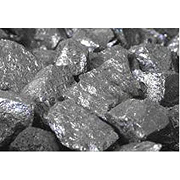
In the applications at issue, Dow Corning Corporation and REC Silicon are seeking approval to import silicon metal, a material of which there is currently a well-documented shortage of available supply in the U.S., to their facilities in Carrollton, Elizabethtown and Shepherdsville, Kentucky (Dow Corning) and Moses Lake, Washington (REC Silicon), which some or all will be exported to foreign markets.
A key policy objective of foreign-trade zones is the creation and maintenance of employment through the encouragement of operations in the United States which, for Customs reasons, might otherwise have been carried on abroad. Foreign-Trade Zones Board Regulations state that this objective is furthered particularly when zones assist exporters and re-exporters and usually when goods arrive from abroad in an unfinished condition for processing here rather than overseas.
"At at time when our nation is struggling to regain its economic strength and ten percent of Americans are out of work, it is irresponsible for protectionist groups to discourage legitimate manufacturing in the U.S. because certain raw materials that are in short supply in the U.S. cannot be purchased at all or at competitive prices for sale in export markets," said Dr. Will Berry, NAFTZ President, in a statement issued following a Thursday conference call of the NAFTZ Board of Directors. "These groups want to force
U.S.-based manufacturers to purchase from limited captive U.S. suppliers.
Exports of Foreign-Trade Zone-produced goods have a highly positive effect on our trade deficit, since those products would otherwise have been manufactured abroad," Berry added. "Moreover, in the cases at issue, these cutting-edge technology companies are retaining valuable research and development in the U.S. that are applied in many industry uses including alternative energy and create highly sought after skilled green-collar jobs."
In its most recent announcement, the Department of Commerce released data showing hat the United States' international trade deficit grew by $1 billion in June, to $27.0 billion. Exports of goods increased $1.9 billion to $84.0 billion, but imports of goods also increased, by $3.0 billion, to $122.4 billion, for a net deficit of $38.4 billion in goods alone.
"I call upon protectionist opponents to the FTZ program to stop raising trade barriers as a method to block U.S. economic activity and instead to focus on the challenge of producing competitive saleable products and creating good jobs for the American people," said Berry. "There's just too much at stake for our nation."
The National Association of Foreign-Trade Zones is a not-for-profit trade association with a membership representing 361 public and private organizations. The NAFTZ has long been the primary voice of communities and industries that utilize the FTZ program, including grantees, operators and users.
WASHINGTON, Sept. 4 /PRNewswire-USNewswire/ -- The National Association of Foreign-Trade Zones (NAFTZ) today challenged foreign-trade zone opponents to provide evidence to support objections lodged against applications by Dow Corning Corporation and REC Silicon for Subzone Authority at the companies' facilities in Kentucky and Washington. The Foreign-Trade Zones Act permits the Foreign-Trade Zones Board to make reasonable determinations concerning the treatment of goods, including goods subject to antidumping and/or countervailing duties. The implementing regulations explicitly provide that this merchandise must be admitted to a zone in "privileged foreign status, "which retains the tariff classification, country of origin and any antidumping or countervailing duty liability until the finished product is entered for consumption into the U.S. Customs territory.
In 1991, the Board concluded that there should be an "absolute requirement" for privileged foreign status for merchandise subject to antidumping or countervailing duties. If merchandise is entered into U.S. commerce, privileged foreign status requires the payment of antidumping and countervailing duty deposits. If the goods are exported from the zone, no entry is made and no antidumping duties are paid.
In the applications at issue, Dow Corning Corporation and REC Silicon are seeking approval to import silicon metal, a material of which there is currently a well-documented shortage of available supply in the U.S., to their facilities in Carrollton, Elizabethtown and Shepherdsville, Kentucky (Dow Corning) and Moses Lake, Washington (REC Silicon), which some or all will be exported to foreign markets.
A key policy objective of foreign-trade zones is the creation and maintenance of employment through the encouragement of operations in the United States which, for Customs reasons, might otherwise have been carried on abroad. Foreign-Trade Zones Board Regulations state that this objective is furthered particularly when zones assist exporters and re-exporters and usually when goods arrive from abroad in an unfinished condition for processing here rather than overseas.
"At at time when our nation is struggling to regain its economic strength and ten percent of Americans are out of work, it is irresponsible for protectionist groups to discourage legitimate manufacturing in the U.S. because certain raw materials that are in short supply in the U.S. cannot be purchased at all or at competitive prices for sale in export markets," said Dr. Will Berry, NAFTZ President, in a statement issued following a Thursday conference call of the NAFTZ Board of Directors. "These groups want to force
U.S.-based manufacturers to purchase from limited captive U.S. suppliers.
Exports of Foreign-Trade Zone-produced goods have a highly positive effect on our trade deficit, since those products would otherwise have been manufactured abroad," Berry added. "Moreover, in the cases at issue, these cutting-edge technology companies are retaining valuable research and development in the U.S. that are applied in many industry uses including alternative energy and create highly sought after skilled green-collar jobs."
In its most recent announcement, the Department of Commerce released data showing hat the United States' international trade deficit grew by $1 billion in June, to $27.0 billion. Exports of goods increased $1.9 billion to $84.0 billion, but imports of goods also increased, by $3.0 billion, to $122.4 billion, for a net deficit of $38.4 billion in goods alone.
"I call upon protectionist opponents to the FTZ program to stop raising trade barriers as a method to block U.S. economic activity and instead to focus on the challenge of producing competitive saleable products and creating good jobs for the American people," said Berry. "There's just too much at stake for our nation."
The National Association of Foreign-Trade Zones is a not-for-profit trade association with a membership representing 361 public and private organizations. The NAFTZ has long been the primary voice of communities and industries that utilize the FTZ program, including grantees, operators and users.
National Association of Foreign-Trade Zones
Willard M. Berry of the National Association of Foreign-Trade Zones,
+1-202-331-1950 or +1-202-203-8538, wberry@naftz.org
Fri Sep 4, 2009 10:58am EDT
Source: www.reuters.com
Willard M. Berry of the National Association of Foreign-Trade Zones,
+1-202-331-1950 or +1-202-203-8538, wberry@naftz.org
Fri Sep 4, 2009 10:58am EDT
Source: www.reuters.com
Các tin khác
- Rising global shipping costs put pressure on Viet Nam’s seafood exporters (22/06/2026)
- India likely to retain anti-dumping duties on Bangladeshi jute products (22/06/2026)
- Japan slaps anti-dumping duties on Chinese, Taiwanese steel (22/06/2026)
- India initiates anti-dumping probe against a Chinese, Japanese chemical used in tyre, rubber items (22/06/2026)
- Reasons why the US continues to suspend customs clearance for Vietnamese trailers (22/06/2026)