Home
Home
 About Us



Monsanto cuts outlook as model shifts
03/06/2010 12:00
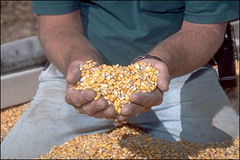
Monsanto, the seed conglomerate, slashed its full-year outlook on Thursday, marking what it said was a “dramatic” change in its business model as it revealed the full cost of its attempt to take on competition in its herbicide business.
Hugh Grant, chief executive, also warned that the US, Brazil and Argentina could be forced to take anti-dumping action against Chinese herbicide producers that were overproducing, fuelling a glut and driving down prices.
The company said it now expected full-year earnings for fiscal 2010 to be $2.15-$2.41 a share, down from its previous guidance of $3.10-$3.30 a share – a figure it has reiterated in recent weeks – and well below Wall Street analysts’ average forecasts of about $3.13 a share.
The downward revision of earnings guidance follows last month’s decision by Monsanto to scrap its target of doubling profit within five years. However, industry-watchers were not expecting the revision to be so extensive.
“This significant change in our approach addresses nearly two years of volatility and uncertainty,” Mr Grant said. “The scope is dramatic and the net effect is real but the certainty and clarity that we achieve by doing this now – and doing this so aggressively – will be what matters to our business long-term.”
Mr Grant suggested that the company’s previous approach had been too timid. “Some may have expected tweaks in the Roundup business, given the early US indicators,” he said. “But knowing what we now know, doing this half-way would only prolong the problem.”
Monsanto, which produces seeds and licenses gene trait technology as well as producing chemicals, has struggled as revenues from Roundup, its glyphosate herbicide, have collapsed. Glyphosate was developed by Monsanto in the 1970s and within a decade had become the world’s most popular herbicide.
However, the herbicide has been off-patent for 10 years and faces generic competitors. Chinese herbicide producers have rushed into the market, driving down prices, while Monsanto has accused rivals of selling cut-price glyphosate as a loss leader for other chemicals.
Monsanto on Thursday signalled that it would not only cut prices further but also that it would reduce production, moving the herbicide business to “the background”. Mr Grant lashed out at what he described as “cheap, $3-a-kilogram Chinese generic acid” and said governments in the Americas could be prompted to take action.
“China is profoundly overbuilt and there’s no indication that capacity has been rationalised,” Mr Grant said. “The embedded total supply infrastructure represents twice the world’s current glyphosate demand and it can’t be rationalised fast enough to retreat from the oversupply the market’s living through today.”
Hugh Grant, chief executive, also warned that the US, Brazil and Argentina could be forced to take anti-dumping action against Chinese herbicide producers that were overproducing, fuelling a glut and driving down prices.
The company said it now expected full-year earnings for fiscal 2010 to be $2.15-$2.41 a share, down from its previous guidance of $3.10-$3.30 a share – a figure it has reiterated in recent weeks – and well below Wall Street analysts’ average forecasts of about $3.13 a share.
The downward revision of earnings guidance follows last month’s decision by Monsanto to scrap its target of doubling profit within five years. However, industry-watchers were not expecting the revision to be so extensive.
“This significant change in our approach addresses nearly two years of volatility and uncertainty,” Mr Grant said. “The scope is dramatic and the net effect is real but the certainty and clarity that we achieve by doing this now – and doing this so aggressively – will be what matters to our business long-term.”
Mr Grant suggested that the company’s previous approach had been too timid. “Some may have expected tweaks in the Roundup business, given the early US indicators,” he said. “But knowing what we now know, doing this half-way would only prolong the problem.”
Monsanto, which produces seeds and licenses gene trait technology as well as producing chemicals, has struggled as revenues from Roundup, its glyphosate herbicide, have collapsed. Glyphosate was developed by Monsanto in the 1970s and within a decade had become the world’s most popular herbicide.
However, the herbicide has been off-patent for 10 years and faces generic competitors. Chinese herbicide producers have rushed into the market, driving down prices, while Monsanto has accused rivals of selling cut-price glyphosate as a loss leader for other chemicals.
Monsanto on Thursday signalled that it would not only cut prices further but also that it would reduce production, moving the herbicide business to “the background”. Mr Grant lashed out at what he described as “cheap, $3-a-kilogram Chinese generic acid” and said governments in the Americas could be prompted to take action.
“China is profoundly overbuilt and there’s no indication that capacity has been rationalised,” Mr Grant said. “The embedded total supply infrastructure represents twice the world’s current glyphosate demand and it can’t be rationalised fast enough to retreat from the oversupply the market’s living through today.”
Monsanto shares fell on the news, losing 4.5 per cent to trade at $50.27 by late morning in New York.
By Hal Weitzman in Chicago
Published: May 28 2010 03:50 | Last updated: May 28 2010 03:50
Source: www.ft.com
By Hal Weitzman in Chicago
Published: May 28 2010 03:50 | Last updated: May 28 2010 03:50
Source: www.ft.com
Các tin khác
- Following the imposition of the highest tariff of 37.13%, the Ministry of Industry and Trade is reviewing galvanized steel from China (19/06/2026)
- Official tariffs have been imposed on colorless float glass imported from Indonesia and Malaysia (19/06/2026)
- India seeks to continue anti-dumping duties on Bangladesh’s jute products (19/06/2026)
- Turkey Initiates Anti-Dumping Investigation into Polyester Cord Fabric from Viet Nam (19/06/2026)
- Chinese dumping in Brazil affected the entire garlic supply chain (19/06/2026)