Home
Home
 About Us



Indonesian Flour Costs Could Rise as Exporters Lose Production
23/08/2010 12:00
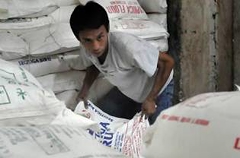
Jakarta. Local flour prices could see increases as steep as 20 percent due to supply shortages from Russia and Turkey, the Indonesian Association of Sugar and Flour Traders (Apegti) has predicted.
“Prices have gone up 10 percent due to increasing demand during Ramadan and are likely to rise 20 percent after the festivities as Russia and Turkey are cutting back on exports,” Apegti chairman Natsir Mansyur said on Sunday.
He said Russia, the world’s third-largest wheat exporter, had cut exports because bad weather had disrupted production.
Russia believes its grain harvest could plunge 38 percent this year to 60 million metric tons. The estimate may be cut further because of a worsening drought.
In Chicago trading, wheat futures have risen 49 percent since June to hit $7.1425 a bushel on Friday. Wheat futures hit a 23-month high of $8.68 on Aug. 5 following the news that Russia was stopping exports.
“Other wheat exporters, such as Canada, have also been affected by extreme weather and this could hurt us further because we import from Canada,” Natsir said. Canadian farmers are expected to see wheat production fall by 15 percent this year because flooding in Saskatchewan and Manitoba has curbed seeding and crop development. Growers predict they will produce 22.7 million metric tons of wheat, down from 26.5 million last year.
Natsir said Indonesia imported all of its wheat demand — 4 million tons a year — as well as 500,000 tons of flour annually. “We are very dependent because Indonesia’s climate is not suitable for growing wheat,” he said.
According to Natsir, Turkey had also cut its exports to Indonesia because it has imposed anti-dumping rules on Turkey’s flour.
“The government’s anti-dumping import duty of around 20 percent has seen Turkey reduce its exports to Indonesia,” he said. “Turkey exporters canceled 30,000 tons of flour destined for Indonesia because of the policy.”
Natsir said Turkey contributed around half of Indonesia’s flour imports. Imported flour accounted for 15 percent of overall national flour sales.
“Without the duty we could increase the amount of imported flour to 25 percent to ensure supply, but that would put local flour producers at a disadvantage,” he added. “There’s no easy and fast solution because we are very dependent. We can try diversifying our menu but that will be hard.”
Indofood Sukses Makmur, the country’s biggest maker of noodles and flour, estimates Indonesia’s consumption of wheat flour may rise 10 percent this year to 4.4 million tons.
Franciscus Welirang, chairman of the Flour Mills Association of Indonesia, the nation’s largest buyer of the grain, said recently that another food crisis was possible if soaring wheat prices drove up the price of other staples.
“Prices have gone up 10 percent due to increasing demand during Ramadan and are likely to rise 20 percent after the festivities as Russia and Turkey are cutting back on exports,” Apegti chairman Natsir Mansyur said on Sunday.
He said Russia, the world’s third-largest wheat exporter, had cut exports because bad weather had disrupted production.
Russia believes its grain harvest could plunge 38 percent this year to 60 million metric tons. The estimate may be cut further because of a worsening drought.
In Chicago trading, wheat futures have risen 49 percent since June to hit $7.1425 a bushel on Friday. Wheat futures hit a 23-month high of $8.68 on Aug. 5 following the news that Russia was stopping exports.
“Other wheat exporters, such as Canada, have also been affected by extreme weather and this could hurt us further because we import from Canada,” Natsir said. Canadian farmers are expected to see wheat production fall by 15 percent this year because flooding in Saskatchewan and Manitoba has curbed seeding and crop development. Growers predict they will produce 22.7 million metric tons of wheat, down from 26.5 million last year.
Natsir said Indonesia imported all of its wheat demand — 4 million tons a year — as well as 500,000 tons of flour annually. “We are very dependent because Indonesia’s climate is not suitable for growing wheat,” he said.
According to Natsir, Turkey had also cut its exports to Indonesia because it has imposed anti-dumping rules on Turkey’s flour.
“The government’s anti-dumping import duty of around 20 percent has seen Turkey reduce its exports to Indonesia,” he said. “Turkey exporters canceled 30,000 tons of flour destined for Indonesia because of the policy.”
Natsir said Turkey contributed around half of Indonesia’s flour imports. Imported flour accounted for 15 percent of overall national flour sales.
“Without the duty we could increase the amount of imported flour to 25 percent to ensure supply, but that would put local flour producers at a disadvantage,” he added. “There’s no easy and fast solution because we are very dependent. We can try diversifying our menu but that will be hard.”
Indofood Sukses Makmur, the country’s biggest maker of noodles and flour, estimates Indonesia’s consumption of wheat flour may rise 10 percent this year to 4.4 million tons.
Franciscus Welirang, chairman of the Flour Mills Association of Indonesia, the nation’s largest buyer of the grain, said recently that another food crisis was possible if soaring wheat prices drove up the price of other staples.
Additional reporting from Bloomberg
Faisal Maliki Baskoro | August 22, 2010
Source: www.thejakartaglobe.com
Faisal Maliki Baskoro | August 22, 2010
Source: www.thejakartaglobe.com
Các tin khác
- Following the imposition of the highest tariff of 37.13%, the Ministry of Industry and Trade is reviewing galvanized steel from China (19/06/2026)
- Official tariffs have been imposed on colorless float glass imported from Indonesia and Malaysia (19/06/2026)
- India seeks to continue anti-dumping duties on Bangladesh’s jute products (19/06/2026)
- Turkey Initiates Anti-Dumping Investigation into Polyester Cord Fabric from Viet Nam (19/06/2026)
- Chinese dumping in Brazil affected the entire garlic supply chain (19/06/2026)