Home
Home
 About Us


India Fails to Lift Restrictions on US Poultry in Consultations
14/05/2012 12:00
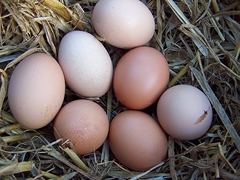
WASHINGTON, D.C. – United States Trade Representative Ron Kirk today announced that the United States has requested the World Trade Organization (WTO) establish a dispute settlement panel to decide U.S. claims regarding the government of India’s restrictions on imports of various U.S. agricultural products, including poultry meat and chicken eggs.
“It is essential that U.S. farmers obtain the reliable market access that India agreed to,” said Kirk in a press release today. “The United States holds its agriculture industry to the highest standards of safety and is confident the WTO will agree that there is no justification for India’s restrictions on U.S. exports.”
In response to today’s announcement, the National Chicken Council, National Turkey Federation and USA Poultry & Egg Export Council released the following statement:
“Unfortunately, the government of India did not lift its unwarranted restrictions on U.S. poultry after consultations with the United States at the WTO in Geneva. However, we are pleased that USTR is taking the next step. We support the dispute settlement process moving forward as soon as possible with the formation of this panel.”
For years, India has used a variety of non-tariff trade barriers to deny access U.S. poultry to the Indian market. Although international health standards, in particular those of the World Organization for Animal Health (OIE), identify only highly pathogenic stains of avian influenza as warranting trade restrictions, India has long ignored those international norms and has banned poultry imports from the United States or any country that reports any incident of avian influenza, even cases of low pathogenicity. This is a protectionist policy that is inconsistent with accepted international standards, and has no health or safety justification. This policy is particularly problematic in the case of the United States, which is the most efficient poultry producer in the world and the world’s leading exporter of poultry products.
By conservative estimates, if India’s trade barriers were eliminated, the value of U.S. poultry exports to India each year would surpass $300 million.
“It is essential that U.S. farmers obtain the reliable market access that India agreed to,” said Kirk in a press release today. “The United States holds its agriculture industry to the highest standards of safety and is confident the WTO will agree that there is no justification for India’s restrictions on U.S. exports.”
In response to today’s announcement, the National Chicken Council, National Turkey Federation and USA Poultry & Egg Export Council released the following statement:
“Unfortunately, the government of India did not lift its unwarranted restrictions on U.S. poultry after consultations with the United States at the WTO in Geneva. However, we are pleased that USTR is taking the next step. We support the dispute settlement process moving forward as soon as possible with the formation of this panel.”
For years, India has used a variety of non-tariff trade barriers to deny access U.S. poultry to the Indian market. Although international health standards, in particular those of the World Organization for Animal Health (OIE), identify only highly pathogenic stains of avian influenza as warranting trade restrictions, India has long ignored those international norms and has banned poultry imports from the United States or any country that reports any incident of avian influenza, even cases of low pathogenicity. This is a protectionist policy that is inconsistent with accepted international standards, and has no health or safety justification. This policy is particularly problematic in the case of the United States, which is the most efficient poultry producer in the world and the world’s leading exporter of poultry products.
By conservative estimates, if India’s trade barriers were eliminated, the value of U.S. poultry exports to India each year would surpass $300 million.
May 11, 2012
Source: nationalchickencouncil.org
Source: nationalchickencouncil.org
Các tin khác
- Following the imposition of the highest tariff of 37.13%, the Ministry of Industry and Trade is reviewing galvanized steel from China (19/06/2026)
- Official tariffs have been imposed on colorless float glass imported from Indonesia and Malaysia (19/06/2026)
- India seeks to continue anti-dumping duties on Bangladesh’s jute products (19/06/2026)
- Turkey Initiates Anti-Dumping Investigation into Polyester Cord Fabric from Viet Nam (19/06/2026)
- Chinese dumping in Brazil affected the entire garlic supply chain (19/06/2026)