Home
Home
 About Us



European chamber urges greater trade liberalization in Taiwan
14/08/2012 12:00
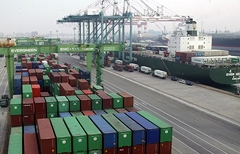
Taipei, Aug. 9 (CNA) Taiwan should lower its barriers to trade with European companies operating in China, the European Chamber of Commerce Taipei (ECCT) said Thursday as Taiwan and China concluded an investment protection agreement.
The Economic Cooperation Framework Agreement (ECFA) signed between Taiwan and China in 2010 has not resolved one of the biggest obstacles facing the ECCT members regarding Taiwan's relations with China, said ECCT President Chris James.
He was referring to Taiwan's restrictions and outright ban on products manufactured in China, many of which are made by European companies in the automotive, electrical engineering and equipment, retail and luxury goods industries.
"Restrictions are a disincentive to investment, foster protectionism, hurt Taiwan's own industry and consumers and work against the promotion of Taiwan as a regional hub," James told CNA in an email interview.
"This directly leads to a cost disadvantage when selling these products in the Taiwanese market," he said.
He said the ECCT has consistently supported efforts to normalize business relations between Taiwan and China and to relax restrictions on investments, but it is too soon to measure the full impact of the ECFA on European business.
The remarks were made against the backdrop of an investment protection pact and a customs cooperation agreement signed Thursday by Taiwan and China in their latest round of high-level talks.
The two pacts are part of the follow-up negotiations to the landmark ECFA.
The top cross-strait negotiators on both sides said Taiwan and China should complete the ECFA follow-up negotiations as soon as possible, including the talks on trade in goods and services and the establishment of a dispute resolution mechanism.
The Economic Cooperation Framework Agreement (ECFA) signed between Taiwan and China in 2010 has not resolved one of the biggest obstacles facing the ECCT members regarding Taiwan's relations with China, said ECCT President Chris James.
He was referring to Taiwan's restrictions and outright ban on products manufactured in China, many of which are made by European companies in the automotive, electrical engineering and equipment, retail and luxury goods industries.
"Restrictions are a disincentive to investment, foster protectionism, hurt Taiwan's own industry and consumers and work against the promotion of Taiwan as a regional hub," James told CNA in an email interview.
"This directly leads to a cost disadvantage when selling these products in the Taiwanese market," he said.
He said the ECCT has consistently supported efforts to normalize business relations between Taiwan and China and to relax restrictions on investments, but it is too soon to measure the full impact of the ECFA on European business.
The remarks were made against the backdrop of an investment protection pact and a customs cooperation agreement signed Thursday by Taiwan and China in their latest round of high-level talks.
The two pacts are part of the follow-up negotiations to the landmark ECFA.
The top cross-strait negotiators on both sides said Taiwan and China should complete the ECFA follow-up negotiations as soon as possible, including the talks on trade in goods and services and the establishment of a dispute resolution mechanism.
2012/08/09 19:05:50
By James Lee and Jeffrey Wu
Source: focustaiwan.tw
By James Lee and Jeffrey Wu
Source: focustaiwan.tw
Các tin khác
- Following the imposition of the highest tariff of 37.13%, the Ministry of Industry and Trade is reviewing galvanized steel from China (19/06/2026)
- Official tariffs have been imposed on colorless float glass imported from Indonesia and Malaysia (19/06/2026)
- India seeks to continue anti-dumping duties on Bangladesh’s jute products (19/06/2026)
- Turkey Initiates Anti-Dumping Investigation into Polyester Cord Fabric from Viet Nam (19/06/2026)
- Chinese dumping in Brazil affected the entire garlic supply chain (19/06/2026)