Home
Home
 About Us



EU warned on protectionism
03/02/2009 12:00
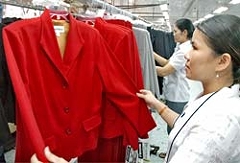
Some of Europe's largest retailers yesterday warned against a resurgence in protectionist behaviour during the downturn, as they seek to avoid an increase in "anti-dumping" cases.
Chief executives including Sir Terry Leahy of Tesco of the UK and Anders Dahlvig of Ikea of Sweden were in Brussels in an effort to see off the perceived reappearance of new trade restrictions called for by struggling producers inside the European Union.
Members of the European retail round table, which included Metro of Germany and Carrefour of France, also reacted strongly to suggestions that the type of stringent regulations facing the financial sector should spill over to their industry.
"The danger is that with the strains in the financial markets that governments lose faith in competition and seek to extend the regulation that they've had to use in the financial sector to all sectors as a short cut to a solution. That would be a mistake," Sir Terry told the Financial Times.
Most of the concern focused on anti-dumping measures, where EU producers can demand temporary tariffs against trade partners - often China - accused of selling goods below cost.
"Clearly there have been examples of protectionism and anti-dumping in the past couple of years," according to Sir Terry. "I believe growth and productivity is best served by open, competitive markets which are responsive to consumers."
"All that anti-dumping does is to push up prices for customers," added Ian Cheshire of Kingfisher, which owns the B&Q and Castorama brands. "It's not a terribly bright thing, and it certainly isn't in the best interest of the EU."
Mr Cheshire also warned of poorly planned policy. "Some products that have been affected by antidumping we can't even source inside the EU," he complained.
Mr Dahlvig said Ikea had already been hit by steep tariffs on imported candles and hinges. "Anti-dumping is a concern. Producers on the verge of bankruptcy will do anything to convince their politicians to offer them assistance.
"The EU needs to remain at the forefront of cutting tariffs," he added.
The industry's concerns chime with data from the World Trade Organisation in October that pointed to a sharp rise in the number of anti-dumping investigations, many of them relating to EU trade.
The increase came as a surprise following years of decline, despite continuing growth in trade figures.
Retailers also used the meeting to demand lighter regulation, presenting themselves as partners of government because of their large number of employees and diverse supply chains.
Chief executives including Sir Terry Leahy of Tesco of the UK and Anders Dahlvig of Ikea of Sweden were in Brussels in an effort to see off the perceived reappearance of new trade restrictions called for by struggling producers inside the European Union.
Members of the European retail round table, which included Metro of Germany and Carrefour of France, also reacted strongly to suggestions that the type of stringent regulations facing the financial sector should spill over to their industry.
"The danger is that with the strains in the financial markets that governments lose faith in competition and seek to extend the regulation that they've had to use in the financial sector to all sectors as a short cut to a solution. That would be a mistake," Sir Terry told the Financial Times.
Most of the concern focused on anti-dumping measures, where EU producers can demand temporary tariffs against trade partners - often China - accused of selling goods below cost.
"Clearly there have been examples of protectionism and anti-dumping in the past couple of years," according to Sir Terry. "I believe growth and productivity is best served by open, competitive markets which are responsive to consumers."
"All that anti-dumping does is to push up prices for customers," added Ian Cheshire of Kingfisher, which owns the B&Q and Castorama brands. "It's not a terribly bright thing, and it certainly isn't in the best interest of the EU."
Mr Cheshire also warned of poorly planned policy. "Some products that have been affected by antidumping we can't even source inside the EU," he complained.
Mr Dahlvig said Ikea had already been hit by steep tariffs on imported candles and hinges. "Anti-dumping is a concern. Producers on the verge of bankruptcy will do anything to convince their politicians to offer them assistance.
"The EU needs to remain at the forefront of cutting tariffs," he added.
The industry's concerns chime with data from the World Trade Organisation in October that pointed to a sharp rise in the number of anti-dumping investigations, many of them relating to EU trade.
The increase came as a surprise following years of decline, despite continuing growth in trade figures.
Retailers also used the meeting to demand lighter regulation, presenting themselves as partners of government because of their large number of employees and diverse supply chains.
By Stanley Pignal in Brussels
Published: January 20 2009 02:00 | Last updated: January 20 2009 02:00
Source: www.ft.com
Published: January 20 2009 02:00 | Last updated: January 20 2009 02:00
Source: www.ft.com
Các tin khác
- Rising global shipping costs put pressure on Viet Nam’s seafood exporters (22/06/2026)
- India likely to retain anti-dumping duties on Bangladeshi jute products (22/06/2026)
- Japan slaps anti-dumping duties on Chinese, Taiwanese steel (22/06/2026)
- India initiates anti-dumping probe against a Chinese, Japanese chemical used in tyre, rubber items (22/06/2026)
- Reasons why the US continues to suspend customs clearance for Vietnamese trailers (22/06/2026)