Home
Home
 About Us



Chinese academics: Protectionism burdens China's exporters
31/08/2010 12:00
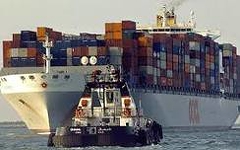
Given the uncertainty surrounding the global recovery, the United States, the European Union and Japan have recently released new trade protectionism measures. Trade protectionism, which is a tool to transfer domestic conflicts to other countries, has become the biggest threat toward Chinese exporters, experts from major Chinese universities have said.
The U.S. Commerce Department on Aug. 26 introduced 14 measures to toughen enforcement of trade laws, including changes to make it harder for individual companies to be excused from country-wide duties, adjustments in methods of anti-dumping calculations and alterations to how labor rates are calculated when determining if products are being sold at artificially low prices.
The European Union proposed a temporary anti-dumping tax of as high as 43.5 percent on fiber glass imported from China. A recent report from Nikkei said that Japan will loosen conditions for enterprises to issue anti-dumping probe applications.
Experts predicted that the U.S. government will issue more anti-dumping and countervailing probes, and there will be higher anti-dumping or countervailing taxes for non-market economy countries.
In 2009, the International Trade Administration under the U.S. Commerce Department launched 34 anti-dumping and countervailing investigations, and a third of them were directed at non-market economy countries.
Data from China's Ministry of Commerce showed that by July 2010, over 80 categories of products are facing U.S. trade remedy measures, and 59 categories are suffering from anti-dumping or countervailing duties by the European Union.
Wang Jinbin, a professor with Renmin University of China, pointed out that the U.S. citizens' confusion and concerns have become a political pressure that pushes the Obama administration to toughen enforcement of trade laws.
U.S. President Barack Obama vowed in January of this year to create 2 million new jobs through export growth and double U.S. exports in five years.
However, U.S. exports only grew 9.1 percent in the second quarter and contributed only 1.08 percentage points to GDP growth rate, the lowest in four seasons. During the same period, its imports hiked 32.4 percent.
In the months ahead, the United States will be forced to choose either protectionism or soaring trade deficits with rising unemployment. It will almost certainly choose the former, but if it overreacts — a likely scenario — it could unleash another round of global protectionism, which will especially hurt trade-surplus countries, Michael Pettis, a Peking University professor, said in an article published in the Financial Times.
Bai Shuqiang, a professor with the University of International Business and Economics, emphasized that an open multi-lateral trade mechanism and the enforcement of WTO rules are of great importance to stimulate global trade recovery and curb trade protectionism.
Experts suggested that China should expand its market in the emerging economies. In fact, emerging economies contributed most to China's surging exports. From January to July, China's exports to the ASEAN, India and Russia have grown by 43.2 percent, 40.1 percent and 70.7 percent, respectively, higher than the growth of exports to developed countries.
The U.S. Commerce Department on Aug. 26 introduced 14 measures to toughen enforcement of trade laws, including changes to make it harder for individual companies to be excused from country-wide duties, adjustments in methods of anti-dumping calculations and alterations to how labor rates are calculated when determining if products are being sold at artificially low prices.
The European Union proposed a temporary anti-dumping tax of as high as 43.5 percent on fiber glass imported from China. A recent report from Nikkei said that Japan will loosen conditions for enterprises to issue anti-dumping probe applications.
Experts predicted that the U.S. government will issue more anti-dumping and countervailing probes, and there will be higher anti-dumping or countervailing taxes for non-market economy countries.
In 2009, the International Trade Administration under the U.S. Commerce Department launched 34 anti-dumping and countervailing investigations, and a third of them were directed at non-market economy countries.
Data from China's Ministry of Commerce showed that by July 2010, over 80 categories of products are facing U.S. trade remedy measures, and 59 categories are suffering from anti-dumping or countervailing duties by the European Union.
Wang Jinbin, a professor with Renmin University of China, pointed out that the U.S. citizens' confusion and concerns have become a political pressure that pushes the Obama administration to toughen enforcement of trade laws.
U.S. President Barack Obama vowed in January of this year to create 2 million new jobs through export growth and double U.S. exports in five years.
However, U.S. exports only grew 9.1 percent in the second quarter and contributed only 1.08 percentage points to GDP growth rate, the lowest in four seasons. During the same period, its imports hiked 32.4 percent.
In the months ahead, the United States will be forced to choose either protectionism or soaring trade deficits with rising unemployment. It will almost certainly choose the former, but if it overreacts — a likely scenario — it could unleash another round of global protectionism, which will especially hurt trade-surplus countries, Michael Pettis, a Peking University professor, said in an article published in the Financial Times.
Bai Shuqiang, a professor with the University of International Business and Economics, emphasized that an open multi-lateral trade mechanism and the enforcement of WTO rules are of great importance to stimulate global trade recovery and curb trade protectionism.
Experts suggested that China should expand its market in the emerging economies. In fact, emerging economies contributed most to China's surging exports. From January to July, China's exports to the ASEAN, India and Russia have grown by 43.2 percent, 40.1 percent and 70.7 percent, respectively, higher than the growth of exports to developed countries.
By People's Daily Online
14:14, August 30, 2010
Source: english.peopledaily.com.cn
14:14, August 30, 2010
Source: english.peopledaily.com.cn
Các tin khác
- Following the imposition of the highest tariff of 37.13%, the Ministry of Industry and Trade is reviewing galvanized steel from China (19/06/2026)
- Official tariffs have been imposed on colorless float glass imported from Indonesia and Malaysia (19/06/2026)
- India seeks to continue anti-dumping duties on Bangladesh’s jute products (19/06/2026)
- Turkey Initiates Anti-Dumping Investigation into Polyester Cord Fabric from Viet Nam (19/06/2026)
- Chinese dumping in Brazil affected the entire garlic supply chain (19/06/2026)