Home
Home
 About Us



'Buy China' Policy
22/06/2009 12:00
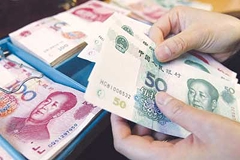
Biggest Beneficiary of Free Trade Should Not Defy It
The reports that the Chinese government is showing signs of reverting to trade protectionism have come at hardly a worse time.
Korea's economy, despite some optimism about a relatively swifter escape from the global recession, still has a long way to go before regaining its health, as shown by recent concerns about the falling prices of Korea's main export products.
Some business papers, including the Financial Times and the Wall Street Journal, reported that China has introduced an explicit ``Buy Chinese'' policy as part of its economic stimulus programs, by obligating government procurement to use only Chinese products or services unless they are not available within the country.
Beijing's move is understandable to some extent, considering the serious unemployment problem in the world's most populous country amid the worst economic crisis since the 1930s. Nevertheless, we can hardly hide our disappointment, thinking China, the biggest beneficiary of free trade, seems to be biting the hand that feeds it. And all the more so, because the same government has criticized other countries, mainly the United States, for committing the same mistake it is about to make and eventually forced Washington to somewhat withdraw its own protectionist sentiment.
Even without China joining, the world is now gripped by perilous temptation to rebuild trade barriers, as shown in similar moves made by French government in auto trade and European Union's export subsidies, which forced developing countries to counter with their own retaliatory steps, such as tariff increases, tougher import licensing systems, technological regulations, antidumping and other safeguard measures. Little wonder some trade watchers are seeing the specter of the rampant protectionism that led to the dreaded ``D'' word ? the Great Depression ? seven decades ago.
If and when the Chinese government's home product-first policy is implemented despite Beijing's official denial, Korea will no doubt prove to be one of the countries hardest hit, owing to its undue dependency on the giant neighbor in both exports and foreign direct investment.
Worse, Seoul, which could avoid the brunt of the similar U.S. policy in the steel industry thanks to the bilateral government procurement pact with Washington, has no such agreement with Beijing, exposing itself quite vulnerable to the reported buy Chinese policy.
Which is why the government should point out its unfair and unjustifiable aspects harder than any of its foreign counterparts.
Source: www.koreatimes.co.kr
Các tin khác
- Rising global shipping costs put pressure on Viet Nam’s seafood exporters (22/06/2026)
- India likely to retain anti-dumping duties on Bangladeshi jute products (22/06/2026)
- Japan slaps anti-dumping duties on Chinese, Taiwanese steel (22/06/2026)
- India initiates anti-dumping probe against a Chinese, Japanese chemical used in tyre, rubber items (22/06/2026)
- Reasons why the US continues to suspend customs clearance for Vietnamese trailers (22/06/2026)