Home
Home
 About Us



Barriers failing to dent global trade
22/10/2009 12:00
A sharply rising number of attempts to block imports has led to a much smaller increase in actual tariffs and affected only a limited share of global trade, according to World Bank research.
The latest results from the Global Antidumping Database, a monitoring service sponsored by the bank, show the number of new official investigations into imposing so-called “trade remedies” – emergency blocks on imports – rising sharply in the third quarter of 2009. Investigations are opened at the behest of domestic producers seeking relief from cheap imports.
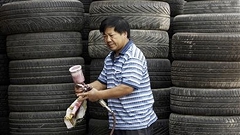
The political salience of import curbs has risen recently after Barack Obama, US president, provoked a hailstorm of criticism by imposing so-called “safeguard” restrictions on Chinese tyres.
But separate research by the bank suggests that the rise in trade barriers has so far affected only a small part of global commerce. New remedies proposed between the first quarter of 2008 and the first quarter of 2009 covered just 0.4 per cent of the value of imports to the US and the European Union. Even the investigations started by China and India, two of the heaviest users of trade remedies, would affect at most 0.6 per cent and 1.8 per cent respectively of their imports.
The figures suggest that despite a flurry of actual and proposed emergency blocks on imports – in defiance of promises by the Group of 20 leading economies to eschew protectionist actions – the restrictions are having little effect on trade.
After starting an investigation into whether imports are being dumped, illicitly subsidised or are simply flooding in at a rate that threatens domestic industry, governments typically impose full restrictions on imports 12-18 months later. The 44 new investigations in the third quarter, a 53 per cent increase on the same quarter in 2008, would normally suggest a wave of restrictions to come next year.
But Chad Bown, a senior economist and trade expert at the World Bank’s research group, said that many fewer investigations were resulting in trade barriers being erected. This year, about half of new investigations have ended in tariffs or quotas being imposed, compared with an average of 80-90 per cent last year.
Mr Bown said that World Trade Organisation rules on the use of trade remedies may have constrained governments. “If governments do not also find evidence that this injury is caused by dumped, surging or subsidised imports, depending on the trade remedy law ... the WTO rules mandate that governments refuse to implement the new trade barriers,” he said.
Trade remedies are typically targeted at low-value industrial inputs such as steel, paper or cement where rich-country producers face fierce price competition, particularly from China.
..............................................
The rising importance of trade remedies
Trade remedies are of three kinds: “anti-dumping” tariffs aimed at imports sold at a price deemed unfairly low; “countervailing duties”, which are imposed on goods that have received trade-distorting government subsidies; and “safeguards”, which are used to slow a sudden flood of imports and protect domestic companies from dislocating change , writes Alan Beattie.
As normal import tariffs have been reduced and capped by World Trade Organisation rules, trade remedies have become an ever more important way for governments to protect domestic industry.
When China joined the WTO in 2001, several governments insisted on creating China-specific safeguard rules allowing them to block Chinese imports, sometimes without having to show that their companies were being damaged.
President Barack Obama’s recent decision to impose tariffs on Chinese tyres was the first use of one such safeguard, but others have also been used by Washington and Brussels to restrict imports of Chinese clothing.
Copyright The Financial Times Limited 2009. You may share using our article tools. Please don't cut articles from FT.com and redistribute by email or post to the web.
The latest results from the Global Antidumping Database, a monitoring service sponsored by the bank, show the number of new official investigations into imposing so-called “trade remedies” – emergency blocks on imports – rising sharply in the third quarter of 2009. Investigations are opened at the behest of domestic producers seeking relief from cheap imports.
The political salience of import curbs has risen recently after Barack Obama, US president, provoked a hailstorm of criticism by imposing so-called “safeguard” restrictions on Chinese tyres.
But separate research by the bank suggests that the rise in trade barriers has so far affected only a small part of global commerce. New remedies proposed between the first quarter of 2008 and the first quarter of 2009 covered just 0.4 per cent of the value of imports to the US and the European Union. Even the investigations started by China and India, two of the heaviest users of trade remedies, would affect at most 0.6 per cent and 1.8 per cent respectively of their imports.
The figures suggest that despite a flurry of actual and proposed emergency blocks on imports – in defiance of promises by the Group of 20 leading economies to eschew protectionist actions – the restrictions are having little effect on trade.
After starting an investigation into whether imports are being dumped, illicitly subsidised or are simply flooding in at a rate that threatens domestic industry, governments typically impose full restrictions on imports 12-18 months later. The 44 new investigations in the third quarter, a 53 per cent increase on the same quarter in 2008, would normally suggest a wave of restrictions to come next year.
But Chad Bown, a senior economist and trade expert at the World Bank’s research group, said that many fewer investigations were resulting in trade barriers being erected. This year, about half of new investigations have ended in tariffs or quotas being imposed, compared with an average of 80-90 per cent last year.
Mr Bown said that World Trade Organisation rules on the use of trade remedies may have constrained governments. “If governments do not also find evidence that this injury is caused by dumped, surging or subsidised imports, depending on the trade remedy law ... the WTO rules mandate that governments refuse to implement the new trade barriers,” he said.
Trade remedies are typically targeted at low-value industrial inputs such as steel, paper or cement where rich-country producers face fierce price competition, particularly from China.
..............................................
The rising importance of trade remedies
Trade remedies are of three kinds: “anti-dumping” tariffs aimed at imports sold at a price deemed unfairly low; “countervailing duties”, which are imposed on goods that have received trade-distorting government subsidies; and “safeguards”, which are used to slow a sudden flood of imports and protect domestic companies from dislocating change , writes Alan Beattie.
As normal import tariffs have been reduced and capped by World Trade Organisation rules, trade remedies have become an ever more important way for governments to protect domestic industry.
When China joined the WTO in 2001, several governments insisted on creating China-specific safeguard rules allowing them to block Chinese imports, sometimes without having to show that their companies were being damaged.
President Barack Obama’s recent decision to impose tariffs on Chinese tyres was the first use of one such safeguard, but others have also been used by Washington and Brussels to restrict imports of Chinese clothing.
Copyright The Financial Times Limited 2009. You may share using our article tools. Please don't cut articles from FT.com and redistribute by email or post to the web.
By Alan Beattie, World Trade Editor
Published: October 20 2009 17:55 | Last updated: October 21 2009 08:58
Source: www.ft.com
Published: October 20 2009 17:55 | Last updated: October 21 2009 08:58
Source: www.ft.com
Các tin khác
- Rising global shipping costs put pressure on Viet Nam’s seafood exporters (22/06/2026)
- India likely to retain anti-dumping duties on Bangladeshi jute products (22/06/2026)
- Japan slaps anti-dumping duties on Chinese, Taiwanese steel (22/06/2026)
- India initiates anti-dumping probe against a Chinese, Japanese chemical used in tyre, rubber items (22/06/2026)
- Reasons why the US continues to suspend customs clearance for Vietnamese trailers (22/06/2026)