Home
Home
 About Us



Australia: Abbott's anti-dumping plan rejected by Productivity Commission
27/11/2011 12:00
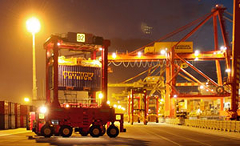
Gary Banks, the chairman of the Productivity Commission, has slapped down a key plank of Tony Abbott’s plan to help manufacturers, dismissing the Coalition's policy for assisting Australian firms in price disputes with foreign rivals.
In another blow to manufacturers’ demands, Mr Banks also rejected the push for rules forcing resources giants to source more of their inputs from Australian suppliers.
With the high dollar taking a hefty toll on many exporters, business groups and unions want the government to take a tougher stance on ‘‘dumping’’ – where foreign firms sell their goods below cost on the local market.
Earlier this month, Mr Abbott vowed to give local businesses a ‘‘fairer go’’ by reversing the onus of proof, so companies thought to have engaged in dumping would have to prove their innocence.
But Mr Banks last night slammed the Coalition’s policy, saying it ‘‘pushes the boundaries of allowable restrictions.’’
The plan risked adding extra costs to the domestic economy and hurting relations with key countries including with China, he said.
‘‘Unfortunately the opposition’s policy falls well short of the balance required, and has now made harder the government’s own efforts to hold the line,’’ Mr Banks told a business dinner in Canberra.
Mr Abbott’s plan on anti-dumping had received support from unlikely quarters, including the powerful Construction, Forestry, Mining and Energy Union, but the government says it would breach trade rules.
Mr Banks also dismissed calls for local content rules to help local firms get a larger slice of mining boom supply contracts.
‘‘When large firms operating here source inputs overseas, this will typically be because it makes financial sense for them to do so. In such cases, it will generally make sense for Australia’s economy too.’’
Mr Banks conceded many manufacturers were indeed struggling under the high exchange rate – but questioned whether this justified more taxpayer support.
‘‘There is little support for the proposition that financial struggle is unique to manufacturing. While nearly 30 per cent of manufacturers recorded a loss in 2009- 10, the share was 40 per cent for farmers and 53 per cent for miners,’’ Mr Banks said.
‘‘What’s more, relative to other industries, manufacturing already gets a lot of government assistance. Net tariff assistance alone was estimated to be around some $6.5 billion in 2009-10, with another $2 billion or so in various subsidies.’’
The Productivity Commission is known for its strict economic orthodoxy in the face of political pressure – and Mr Banks last night acknowledged this by saying ‘‘the politics of good policy do not favour the faint-hearted.’’
By Clancy Yeates
Source: smh.com.au
Các tin khác
- Following the imposition of the highest tariff of 37.13%, the Ministry of Industry and Trade is reviewing galvanized steel from China (19/06/2026)
- Official tariffs have been imposed on colorless float glass imported from Indonesia and Malaysia (19/06/2026)
- India seeks to continue anti-dumping duties on Bangladesh’s jute products (19/06/2026)
- Turkey Initiates Anti-Dumping Investigation into Polyester Cord Fabric from Viet Nam (19/06/2026)
- Chinese dumping in Brazil affected the entire garlic supply chain (19/06/2026)