Home
Home
 About Us


AISI submit written statement about China non compliance
03/10/2008 12:00
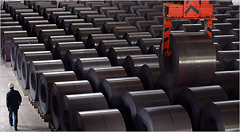
The American Iron and Steel Institute on behalf of its US member companies submitted a written statement that expresses serious concerns to the interagency Trade Policy Staff Committee about China’s non-compliance with the commitments it has made to the World Trade Organization.
The comments highlight the US Administration’s need to address the fact that “China’s steel industry continues to grow dramatically due to unfair practices that are in violation of market principles and China’s WTO commitments.” As emphasized in the AISI submission, Chinese subsidies, currency manipulation, overcapacity and non-market behavior are undermining the US manufacturing base. Thus, there is an urgent need for the US government to
1. Pursue additional WTO action as necessary to deal with China’s failure to comply with its WTO obligations
2. Take immediate and effective steps to counter China’s manipulation of its currency
3. Pursue bilateral and other consultations to demand true rectification of China’s market-distorting practices
4. Ensure strong and effective enforcement of US trade laws, particularly our antidumping and countervailing duty laws
The Chinese government’s massive subsidization continues to provide unfair benefits to Chinese manufacturers, while running counter to China’s obligations as a member of the WTO. “Given that China has subsidized its steel industry for years, and that its government policy plainly provides for further subsidies going forward, it is clear that dialogue alone will not be sufficient to solve this problem.” Therefore, AISI urges the Administration to “effectively enforce US. CVD laws against subsidized imports from China and pursue WTO litigation against Chinese subsidies where appropriate.”
With regard to currency manipulation, AISI, along with other manufacturers, has long expressed concern over China’s policy of controlling the exchange rate between its currency and the US dollar. A recent econometric study indicates that China’s currency remains undervalued by at least 35 percent. AISI urges the Administration to make currency manipulation of the type practiced by China actionable under US trade remedy laws and to pursue WTO action to protect US rights.
The submission stresses that, notwithstanding Chinese claims to the contrary China remains a non-market economy under US law and must continue to be treated as such by our Department of Commerce. In addition, the statement highlights the need for the Administration to start enforcing the China-specific safeguard provisions of Section 421 of US trade law. This statute has yet to result in a single trade remedy, in spite of repeated affirmative findings of Chinese market disruption by the International Trade Commission. The statement also urges the Administration to keep pressing the government of China to show more respect for intellectual property rights and for product safety issues affecting steel and other products.
As documented in the AISI submission, the serious concerns about China’s failure to comply with its WTO obligations are only heightened by the enormous size of the Chinese steel industry and by the ongoing government ownership, direction and subsidies. These non market factors have led to the dramatic growth of China’s steel industry, to China’s position as the world’s number one net steel exporting nation and to the consequent harm that has been done to US and other producers of steel and steel-containing products.
The AISI statement also points out that China has failed to comply with its WTO commitment by continuing to impose restrictions on exports of critical minerals and raw materials including quotas, related licensing requirements and duties. In the case of coke exports, which is just one of the vital steelmaking inputs on which China has placed export restrictions, China has raised the export tax to 40% and, in 2008, reduced its global export quota by 2 million tonnes.
The comments highlight the US Administration’s need to address the fact that “China’s steel industry continues to grow dramatically due to unfair practices that are in violation of market principles and China’s WTO commitments.” As emphasized in the AISI submission, Chinese subsidies, currency manipulation, overcapacity and non-market behavior are undermining the US manufacturing base. Thus, there is an urgent need for the US government to
1. Pursue additional WTO action as necessary to deal with China’s failure to comply with its WTO obligations
2. Take immediate and effective steps to counter China’s manipulation of its currency
3. Pursue bilateral and other consultations to demand true rectification of China’s market-distorting practices
4. Ensure strong and effective enforcement of US trade laws, particularly our antidumping and countervailing duty laws
The Chinese government’s massive subsidization continues to provide unfair benefits to Chinese manufacturers, while running counter to China’s obligations as a member of the WTO. “Given that China has subsidized its steel industry for years, and that its government policy plainly provides for further subsidies going forward, it is clear that dialogue alone will not be sufficient to solve this problem.” Therefore, AISI urges the Administration to “effectively enforce US. CVD laws against subsidized imports from China and pursue WTO litigation against Chinese subsidies where appropriate.”
With regard to currency manipulation, AISI, along with other manufacturers, has long expressed concern over China’s policy of controlling the exchange rate between its currency and the US dollar. A recent econometric study indicates that China’s currency remains undervalued by at least 35 percent. AISI urges the Administration to make currency manipulation of the type practiced by China actionable under US trade remedy laws and to pursue WTO action to protect US rights.
The submission stresses that, notwithstanding Chinese claims to the contrary China remains a non-market economy under US law and must continue to be treated as such by our Department of Commerce. In addition, the statement highlights the need for the Administration to start enforcing the China-specific safeguard provisions of Section 421 of US trade law. This statute has yet to result in a single trade remedy, in spite of repeated affirmative findings of Chinese market disruption by the International Trade Commission. The statement also urges the Administration to keep pressing the government of China to show more respect for intellectual property rights and for product safety issues affecting steel and other products.
As documented in the AISI submission, the serious concerns about China’s failure to comply with its WTO obligations are only heightened by the enormous size of the Chinese steel industry and by the ongoing government ownership, direction and subsidies. These non market factors have led to the dramatic growth of China’s steel industry, to China’s position as the world’s number one net steel exporting nation and to the consequent harm that has been done to US and other producers of steel and steel-containing products.
The AISI statement also points out that China has failed to comply with its WTO commitment by continuing to impose restrictions on exports of critical minerals and raw materials including quotas, related licensing requirements and duties. In the case of coke exports, which is just one of the vital steelmaking inputs on which China has placed export restrictions, China has raised the export tax to 40% and, in 2008, reduced its global export quota by 2 million tonnes.
Sep 28, 2008
Source: steelguru.com
Source: steelguru.com
Các tin khác
- Following the imposition of the highest tariff of 37.13%, the Ministry of Industry and Trade is reviewing galvanized steel from China (19/06/2026)
- Official tariffs have been imposed on colorless float glass imported from Indonesia and Malaysia (19/06/2026)
- India seeks to continue anti-dumping duties on Bangladesh’s jute products (19/06/2026)
- Turkey Initiates Anti-Dumping Investigation into Polyester Cord Fabric from Viet Nam (19/06/2026)
- Chinese dumping in Brazil affected the entire garlic supply chain (19/06/2026)