Home
Home
 About Us



After the United States, EU, and United Kingdom, Japan Joins In — Steel Protectionism Intensifies
06/07/2026 09:18
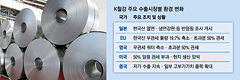
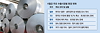
The global steel market is rapidly shifting into a survival-of-the-fittest phase as countries tighten protectionist measures. Korean steelmakers are under pressure on both exports and profitability, with Japan's anti-dumping probe, the European Union's reduced quota system, and U.S. pressure to expand local production all hitting at once.
According to the steel industry on the 5th, domestic steelmakers are growing increasingly vocal after Japan launched an anti-dumping investigation into Korean steel products. The industry says the Korean government showed leniency by taking a tolerant approach even when Japanese steel faced anti-dumping rulings, while Japan is now mounting an excessive counterattack.
Japan's Ministry of Economy, Trade and Industry and Ministry of Finance launched anti-dumping investigations into Korean hot-rolled and cold-rolled steel sheets on the first of last month, following a probe into galvanized steel sheets in August last year. The investigation also covers China and Taiwan, and local steelmakers such as Nippon Steel, JFE Steel, and Kobe Steel led the complaint. If the probe results in anti-dumping duties, exporters including POSCO and Hyundai Steel will inevitably be hit.
The steel industry is pushing back because it believes the Korean government showed 'leniency' earlier this year by accepting a 'price undertaking system (MIP)' for Japanese hot-rolled steel.
Under the price undertaking system, imports are allowed without anti-dumping duties if the importer agrees to set the import price above a certain level.
Domestic companies have long argued that the influx of low-priced Japanese hot-rolled steel has disrupted the local distribution market. In fact, Japan's hot-rolled steel imports reached about 1.9 million tons a year in 2024, exceeding imports from China. By contrast, the industry says Korean steel has little impact on the distribution market because it is mainly supplied directly to automakers and other local customers, and exports to Japan have also been declining since last year.
An industry official said, "The impact of low-priced Japanese hot-rolled steel imports had pushed the profitability of domestic blast furnace producers at the time to nearly break-even levels," adding, "It is hard to see this as a simple response to Korea's anti-dumping measures, because market conditions in the two countries are different."
Regulatory pressure is also mounting in Europe and North America. Starting on the 1st of this month, the EU cut its duty-free quota for Korean steel by 19.7 percent, lowering it to 2.073 million tons a year. The United States, meanwhile, is pressuring domestic production with a steep 50 percent tariff.
Still, support from the government for an industry cornered on all sides is seen as insufficient. The K-Steel Act took effect on the 17th of last month, but support for industrial electricity rates, a key measure demanded by the industry, was left out of the final version.
Source: MK
Các tin khác
- Viet Nam, EFTA finalize negotiations on free trade deal (06/07/2026)
- Viet Nam posts trade deficit of US$16.65bil in first six months (06/07/2026)
- India launches anti-dumping investigations on five imports amid rising concerns over trade imbalance with China (06/07/2026)
- OPEC+ tipped to raise quotas again (06/07/2026)
- Taiwan showcases supply chain strengths at Viet Nam industrial exhibitions (06/07/2026)