Home
Home
 About Us


WTO must evolve to stay relevant in trade policy
13/12/2013 12:00
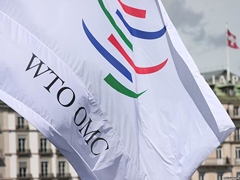
On Dec 7, 2013, members of the World Trade Organization agreed to a "Bali package" that has as its central focus the streamlining of trade by reducing red-tape and making customs procedures more effective. The package represents a significant step forward for the WTO, whose efforts at trade liberalisation had previously been stymied by the breakdown of the Doha round of negotiations a decade ago. Indeed, observers have hailed the Bali package as a "historic moment" in the WTO's history that has saved the WTO from policy irrelevance.
Yet, ongoing regional trade negotiations such as the Trans-Pacific Partnership (TPP), Transatlantic Trade and Investment Partnership (TTIP) and Regional Comprehensive Economic Partnership (RCEP) suggest that the process of trade liberalisation will remain regionally driven. The fact that the Bali package is focused on customs procedures while regional trade negotiations are centred on issues of trade barrier reduction points to an irrelevance and even obsolescence of the WTO.
In other words, the grunt work of liberalising trade and reducing trade barriers will continue to be done by regional trade pacts while the WTO's role is likely to remain symbolic and focused on marginal improvements to trade expansion. As observers have noted, the Bali package's focus on streamlining customs procedures is nothing new. Customs agencies have over the decades been computerising their systems and finding ways to facilitate trade by reducing administrative red-tape and compliance costs.
Most countries understand that streamlining customs procedures are crucial to trade facilitation and enhancing national economic competitiveness. Such measures are focused on improving the efficiency of trade. Given global market forces and pressures on competitiveness, countries are likely to work towards promoting greater efficiency on their own accord. However, enhancing efficiency will have limited long-term impact on trade expansion if trade barriers and protectionist measures continue to hamper trade flows. In other words, there is a need to improve the effectiveness of trade.
Source: businesstimes.com.sg
Các tin khác
- Viet Nam's steel industry takes another step forward in the anti-dumping lawsuit against Chinese goods (17/06/2026)
- Türkiye launches anti-dumping probe into car tire imports (17/06/2026)
- TRA proposes extending anti-dumping measure on wire rod (17/06/2026)
- Ample room remains for Viet Nam–India logistics cooperation (17/06/2026)
- Local authorities to directly issue fragrant rice export certificates from July 2026 (17/06/2026)