Home
Home
 About Us



Vietnam’s mattress star rising rapidly as Chinese imports wane
29/07/2019 12:00
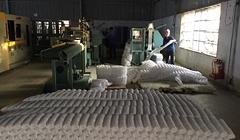
In sprawling mattress factories outside this bustling city, a new bedding power is on the rise.
Vietnam, a regular stop on bedding producers’ sourcing trips, is now flexing its muscle on the world bedding stage.
With preliminary anti-dumping duties recently announced on Chinese mattresses, and Chinese mattress imports waning, Vietnam is on the ascent.
In January 2019, mattress imports from Vietnam were just 20,272. They’ve risen steadily since then. In May, for the first time ever, Vietnamese mattress imports topped the 100,000 mark, reaching 109,959 units.
Vietnam mattress imports are rising like a rocket, government figures reveal. And other countries, such as Mexico, are also seeing strong growth.
Why? The prospect of steep anti-dumping duties on Chinese mattresses and the imposition by the Trump administration of tariffs on Chinese mattresses combined to dampen U.S. retailers’ and distributors’ interest in Chinese mattresses, spurring them to look to other countries for value-priced mattresses, bedding observers say.
Chinese mattress imports have plunged from 559,314 in January to 149,602 in May.
While the bedding industry has been focusing on finding mattress factories in Vietnam as an alternative to China, and Vietnam has been dominating bedding sourcing conversations, Mexico is quietly emerging as an alternative to China in its own right.
In May, mattress imports from Mexico hit 118,777, the first time Mexican mattress units topped 100,000. In February, the figure stood at just 55,043.
The rise of Mexico and Vietnam as alternatives to China has helped offset the declines in China mattress imports. That was especially obvious in May, when Chinese mattress imports dropped 58%, but total mattress imports actually posted a 4% increase.
The overall rise of mattress imports, even as Chinese imports trend down, has some bedding observers wondering how much anti-dumping duties on Chinese mattresses will help U.S. bedding producers.
Raymond James, an analyst firm that follows the bedding industry closely, described recent import trends as “concerning.” If they continue, it would cause the firm “to reconsider how beneficial we think the anti-dumping duties will be to the domestic bedding industry,” the company said in a recent report.
The U.S. Department of Commerce’s preliminary anti-dumping duties against Chinese mattress imports were announced in May, “so it is going to take more time to get a better understanding of the impact from the duties and any shifts in production,” Raymond James said.
“The increase in mattress imports from Vietnam is not entirely surprising, as most industry participants (ourselves included) expected some volume to shift to Vietnam from China as a result of the anti-dumping duties on China mattress imports,” the company said. “Recall, residential furniture production has been shifting out of China to Vietnam for years.”
Vietnam’s mattress imports are running at a current annualized rate of 1.3 million units, a level far below the 6.2 million unit rate peak achieved by China earlier this year, Raymond James noted.
Source: Furniture Today
Vietnam, a regular stop on bedding producers’ sourcing trips, is now flexing its muscle on the world bedding stage.
With preliminary anti-dumping duties recently announced on Chinese mattresses, and Chinese mattress imports waning, Vietnam is on the ascent.
In January 2019, mattress imports from Vietnam were just 20,272. They’ve risen steadily since then. In May, for the first time ever, Vietnamese mattress imports topped the 100,000 mark, reaching 109,959 units.
Vietnam mattress imports are rising like a rocket, government figures reveal. And other countries, such as Mexico, are also seeing strong growth.
Why? The prospect of steep anti-dumping duties on Chinese mattresses and the imposition by the Trump administration of tariffs on Chinese mattresses combined to dampen U.S. retailers’ and distributors’ interest in Chinese mattresses, spurring them to look to other countries for value-priced mattresses, bedding observers say.
Chinese mattress imports have plunged from 559,314 in January to 149,602 in May.
While the bedding industry has been focusing on finding mattress factories in Vietnam as an alternative to China, and Vietnam has been dominating bedding sourcing conversations, Mexico is quietly emerging as an alternative to China in its own right.
In May, mattress imports from Mexico hit 118,777, the first time Mexican mattress units topped 100,000. In February, the figure stood at just 55,043.
The rise of Mexico and Vietnam as alternatives to China has helped offset the declines in China mattress imports. That was especially obvious in May, when Chinese mattress imports dropped 58%, but total mattress imports actually posted a 4% increase.
The overall rise of mattress imports, even as Chinese imports trend down, has some bedding observers wondering how much anti-dumping duties on Chinese mattresses will help U.S. bedding producers.
Raymond James, an analyst firm that follows the bedding industry closely, described recent import trends as “concerning.” If they continue, it would cause the firm “to reconsider how beneficial we think the anti-dumping duties will be to the domestic bedding industry,” the company said in a recent report.
The U.S. Department of Commerce’s preliminary anti-dumping duties against Chinese mattress imports were announced in May, “so it is going to take more time to get a better understanding of the impact from the duties and any shifts in production,” Raymond James said.
“The increase in mattress imports from Vietnam is not entirely surprising, as most industry participants (ourselves included) expected some volume to shift to Vietnam from China as a result of the anti-dumping duties on China mattress imports,” the company said. “Recall, residential furniture production has been shifting out of China to Vietnam for years.”
Vietnam’s mattress imports are running at a current annualized rate of 1.3 million units, a level far below the 6.2 million unit rate peak achieved by China earlier this year, Raymond James noted.
Source: Furniture Today
Các tin khác
- MoIT tightens 'Made in Viet Nam' criteria to combat trade fraud (12/06/2026)
- Viet Nam receives AD petition against Chinese prestressed steel bars (12/06/2026)
- India’s anti-dumping shield on Asian aluminium foil to stay up through 2026 (12/06/2026)
- Amended Customs Law: Removing 'bottlenecks' to help businesses accelerate import and export (12/06/2026)
- Expanding export markets in the era of integration (12/06/2026)