Home
Home
 About Us


Viet Nam's economy faces the opportunity for double-digit growth
31/12/2025 03:45
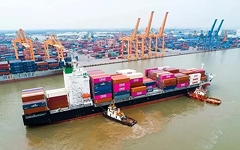
Restructuring the economy, including restructuring public investment and the financial and banking system, are necessary solutions to achieve double-digit growth targets for the 2026-2030 period. In 2025, Viet Nam aims for GDP growth exceeding 8%. Based on socio-economic statistics for the first 11 months of 2025, economic experts believe that achieving an 8% GDP growth target in 2025 is entirely feasible.
Specifically, based on the economic picture for the first 11 months, economist Dr. Nguyen Minh Phong believes that an 8% growth rate in 2025 is entirely feasible. However, the ability to achieve the target of 8.3-8.5% growth in 2025 depends on the growth rate in the last month of the year, but there is reason for optimism. This is because the last month of the year usually sees a surge in the disbursement of public investment, export turnover, and consumption. The government has also directed the acceleration of public investment disbursement in 2025 to reach 100%, and the last month of the year is also the peak season for consumption, creating momentum for economic growth.
According to the summary report on the results of socio-economic development in 2025 and the five-year period (2021-2025) submitted by the Government to the National Assembly at the 10th session, the Vietnamese economy has affirmed its ability to withstand external shocks and maintain a growth rate among the highest in the world .
Specifically, the government's report submitted to the National Assembly projects that GDP in 2025 will increase by over 8% compared to the same period last year; average GDP growth for the period 2021-2025 will be 6.3%, higher than the previous term's 6.2%. The growth results for the 2021-2025 period are considered quite positive, especially given that in 2021, Viet Nam's economy was heavily impacted by the COVID-19 pandemic, resulting in GDP growth of only 2.55%; the average growth for the four-year period 2022-2025 is projected at 7.2% per year, exceeding the target of 6.5-7%.
Along with impressive economic growth, the size of Viet Nam's economy also increased from US$346 billion in 2020 to US$510 billion in 2025, climbing 5 places to 32nd in the world; GDP per capita in 2025 is estimated to reach approximately US$5,000, 1.4 times higher than in 2020, placing it in the upper-middle income group.
According to economic experts, GDP growth in 2025 and the period 2021-2025 is an important prerequisite for Viet Nam to set a double-digit growth target in the period 2026-2030, aiming to become an upper-middle-income country by 2030 and a high-income country by 2045.
Viet Nam has ample opportunity to achieve double-digit growth between 2026 and 2030 and become a high-income country by 2045. However, the global and domestic economic landscape is facing significant challenges. The Vietnamese economy is considerably affected by complex geopolitical conflicts in many regions and protectionist trade policies in other countries. Furthermore, the Vietnamese economy is hampered by the limited capacity and adaptability of businesses within the value chain; climate change; environmental pollution; and extreme weather events negatively impacting socio-economic development and people's lives.
To overcome these challenges, it is necessary to shape a development mindset and establish a new growth model. This involves creating new growth drivers linked to science and technology, innovation, digital transformation, and green transformation; while simultaneously implementing decisive and effective solutions and organizational measures to maximize and revitalize traditional growth drivers.
Sharing the same viewpoint, Dr. Vo Tri Thanh, Director of the Institute for Brand and Competition Strategy Research, shared that international experience shows that: To innovate the growth model, Viet Nam needs to innovate its thinking, aiming to build a sustainable and inclusive growth model, shifting from "brown" to "green," linking the real economy with the digital economy, developing science and technology, so that everyone can benefit.
According to Dr. Vo Tri Thanh, countries with a high degree of success in transforming their growth models all have financial policies that play a constructive role in development, promoting innovation and proactively leading the restructuring of the economy. At the same time, attention should be paid to perfecting the financial policy framework, contributing to promoting the transformation of the growth model towards sustainability, transparency, and efficiency.
Nguyen Quoc Anh, Deputy Director of the Institute of Economic and Financial Strategy and Policy (Ministry of Finance), recommends that Viet Nam needs to shift its growth model from extensive to intensive, based on innovation, technology, and the green economy.
To achieve a successful transformation, Mr. Nguyen Quoc Anh outlined three key strategic priorities. Viet Nam needs to shift from extensive to intensive growth, with total factor productivity (TFP) becoming the primary indicator. Improving labor productivity through technology application, training high-quality human resources, and promoting modern management will be decisive factors.
Alongside this, a strong restructuring of the economy towards modernization is necessary. Long-term bottlenecks such as institutions, infrastructure, and human resource quality must be addressed simultaneously. The digital economy, green economy, and circular economy will be the "key" to unlocking deep integration and global competitiveness. Building innovation centers, developing the semiconductor chip industry, renewable energy, and a low-carbon economy are no longer options but inevitable trends.
Furthermore, it is essential to build a transparent and substantive system of performance indicators. Policies cannot rely on slogans but must be monitored using concrete figures such as: the proportion of the digital economy in GDP, social labor productivity, the contribution of TFP to growth, or the percentage of businesses adopting technological innovation.
In particular, for comprehensive economic restructuring, the role of the private sector must be emphasized. The private sector must be the pioneering force in the transformation of the growth model. Knowledge-based, modern management, and global thinking leading businesses will create a strong impetus for the economy; at the same time, policies must create a fair competitive environment and encourage investment in high-tech and green sectors.
Source: Dai Bieu Nhan Dan News
Các tin khác
- U.S. to Impose Duties on Mexican, Thai, Vietnamese Chassis (03/06/2026)
- Mexican sugar producers push to scrap U.S. import quotas (03/06/2026)
- Japan launched an anti-dumping investigation into flat steel imports from three countries (03/06/2026)
- Eurochem challenges anti-dumping duties in the EU (03/06/2026)
- Pangasius prices in Viet Nam surge due to high export demand (03/06/2026)