Home
Home
 About Us


Viet Nam-Singapore trade turnover continues its record growth trend
19/12/2025 11:24
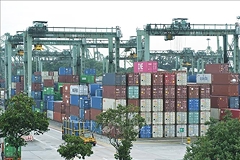
According to the Viet Nam News Agency correspondent in Singapore, in the first 11 months of 2025, Viet Nam-Singapore trade relations continued to flourish with good growth rates in both exports and imports.
Viet Nam continues to maintain its position as Singapore's 10th largest trading partner, with bilateral trade totaling nearly SGD 36 billion, a 25.7% increase compared to the same period in 2024, and a 13.56% increase compared to the total trade for the whole year of 2024 (SGD 31.67 billion). This is the highest bilateral import and export value ever recorded.
The Viet Nam Trade Office in Singapore, citing statistics from the Singapore Enterprise Agency, reported that in November 2025 alone, the total import and export turnover between Singapore and Viet Nam reached SGD 2.9 billion, an increase of 15.8% compared to the same period in 2024. Of this, Singapore's exports to Viet Nam reached SGD 1.8 billion, an increase of 0.1%; and imports from Viet Nam reached SGD 1.1 billion, an increase of 55.2%. Within Singapore's exports, the value of domestically produced goods exported to Viet Nam reached SGD 450.3 million, a decrease of 13.4%, while the value of goods temporarily imported for re-export (transit) to Viet Nam reached SGD 1.4 billion, an increase of 5.6%.
In the first 11 months of 2025, Singapore's total trade with Viet Nam reached S$36 billion, a 25.7% increase compared to the same period in 2024. Of this, Singapore's exports to Viet Nam reached S$24.5 billion, a 17.7% increase, while imports from Viet Nam reached S$11.5 billion, a 47.2% increase. Within Singapore's exports, the value of domestically produced goods exported to Viet Nam reached S$6.6 billion, a 4.8% increase, while the value of goods temporarily imported for re-export (transit) to Viet Nam reached S$17.9 billion, a 23.3% increase.
If only considering import and export figures, Singapore is currently a net exporter, with a trade surplus with Viet Nam reaching SGD 13 billion, as recorded by Singapore, equivalent to the same period in 2024. However, temporary imports for re-export through Singapore account for a large proportion of SGD 17.9 billion out of a total of SGD 24.5 billion, representing over 73% of total exports to Viet Nam. Therefore, considering goods originating from Singapore and goods originating from Viet Nam separately, Viet Nam had a trade surplus of SGD 4.88 billion in the first 11 months of 2025.
Regarding exports, in the first 11 months of 2025, two product groups, namely Machinery and electrical equipment and parts (HS 85) and Fuels, petroleum and distillate products; bituminous substances; mineral waxes (HS 27), continued to be Singapore's top 1st and 2nd export groups to Viet Nam. The total export value of these two groups reached S$16.5 billion, accounting for 67.5% of Singapore's total exports to Viet Nam in the first 11 months of 2025. These two groups are also experiencing significant growth, specifically: Machinery and electrical equipment and parts (HS 85) had an export value to Viet Nam of S$12.8 billion, an increase of 28.2% compared to the same period in 2024; Fuels, petroleum and distillate products; bituminous substances; Mineral waxes (HS 27) reached S$3.7 billion, an increase of 14.2%.
Although both groups account for a high proportion, the nature of Singapore's exports to Viet Nam differs significantly. While the Machinery and Electrical Equipment and Parts group (HS 85) has a 96.8% re-export rate from a third country, the Fuels, Petroleum and Distillate Products; Bituminous Substances; Mineral Waxes group (HS 27) is primarily produced domestically in Singapore, with the domestic value component of exports to Viet Nam reaching 99%.
Besides the two groups mentioned above, the Top 15 main export groups from Singapore to Viet Nam in the first 11 months of 2025 also include several other noteworthy groups such as Nuclear reactors, boilers, machinery and equipment and parts (HS 84) reaching SGD 2 billion, an increase of 39.1%; Plastics and plastic products (HS 39) reaching SGD 929.8 million, a decrease of 9.5%; and Essential oils, perfumes, cosmetics or hygiene preparations (HS 33) reaching SGD 553.7 million, a decrease of 8%.
In the first 11 months of 2025, the Machinery and Electrical Equipment and Parts (HS 85) group continued to be the highest-valued import group that Singapore imported from Viet Nam, reaching nearly SGD 5.9 billion, a 105.5% increase compared to the same period in 2024 and accounting for 51.9% of Singapore's total imports from Viet Nam. Ranking second and third in terms of import value from Viet Nam were the following groups: Nuclear reactors, boilers, machinery and mechanical equipment and parts (HS 84), reaching SGD 2.7 billion, a 68.3% increase; and Glass and glass products (HS 70), reaching nearly SGD 774.4 million, a 3.1% increase.
Furthermore, the remaining groups in Singapore's Top 15 main import categories from Viet Nam mostly recorded negative growth compared to the same period in 2024, with only three groups recording positive growth: Fish and crustaceans/molluscs/other aquatic invertebrates (HS 03), reaching SGD 112.6 million, up 13.3%; Optical/photographic/cinematic/precision measuring/ medical or surgical examination instruments and equipment and parts/accessories (HS 90), reaching SGD 103.3 million, up 29.8%; and Beverages, alcoholic beverages and vinegar (HS 22), reaching SGD 45.5 million, up 23.9%.
According to Mr. Cao Xuan Thang, Viet Nam's Commercial Counselor in Singapore, Singapore's economy may grow more slowly in 2026 compared to 2025. Viet Nam, Singapore's 10th largest trading partner, will also be directly affected. Singapore, with its unique role as a transit market, has a domestic consumption capacity of 6 million people and approximately 15 million tourists annually that is generally saturated. Market growth is primarily driven by Singaporean entrepreneurs exporting to third countries. Therefore, to maintain export growth with the Singapore market, businesses need to continue maintaining high product quality, improving product design and packaging, applying technology to ensure production volume and quality, reducing production costs, and preserving the reputation of product brands, corporate brands, and national brands internationally.
Source: Tin Tuc News
Các tin khác
- U.S. to Impose Duties on Mexican, Thai, Vietnamese Chassis (03/06/2026)
- Mexican sugar producers push to scrap U.S. import quotas (03/06/2026)
- Japan launched an anti-dumping investigation into flat steel imports from three countries (03/06/2026)
- Eurochem challenges anti-dumping duties in the EU (03/06/2026)
- Pangasius prices in Viet Nam surge due to high export demand (03/06/2026)