Home
Home
 About Us


Viet Nam has become a key export market for South Korea in ASEAN
26/01/2026 05:00
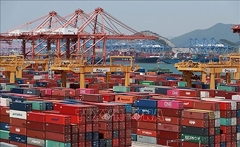
According to the Viet Nam News Agency correspondent in Seoul, on January 26, the Ministry of Industry, Trade and Energy (MOTIE) and the Korea International Trade Association (KITA) announced figures showing that South Korea's exports to Viet Nam in 2025 reached US$62.8 billion, an increase of 7.6% compared to the previous year. Conversely, South Korea's imports from Viet Nam also increased by 11.7%, reaching US$31.8 billion.
Thus, total bilateral trade between South Korea and Viet Nam increased from $86.8 billion to $94.5 billion, equivalent to a growth rate of 9%. This figure is currently about 35% of the $272.7 billion of its leading partner, China, and 48% of the $196.2 billion of the United States.
In terms of export growth rate, Viet Nam ranks second with a 7.6% increase, behind only Taiwan (China) - a booming market driven by demand for artificial intelligence (AI) chips.
Notably, South Korea recorded a trade surplus of $31 billion with Viet Nam, an increase of $1.1 billion from $29.9 billion in 2024. This result makes Viet Nam the second largest contributor to South Korea's trade surplus, after the US with $495 billion.
Previously, in 2022, Viet Nam held the top position among countries with the largest trade surplus with South Korea and maintained the second position for the past three years. The main driving force behind this growth came from the booming semiconductor sector. Thanks to the wave of AI and global data centers, semiconductors – a key export product of South Korea – set a historical record with revenue of $173.4 billion.
In the Vietnamese market, semiconductors are also the number one export item, with export value reaching $24.7 billion in 2025, a strong growth of 36.7% compared to the same period last year.
Since establishing diplomatic relations in 1992, trade between South Korea and Viet Nam has skyrocketed, increasing 190-fold from its initial $500 million. The range of goods traded has evolved from labor-intensive items like textiles to high value-added products such as semiconductors and wireless communication equipment.
In particular, since the Viet Nam-Korea Free Trade Agreement (VKFTA) was signed in 2014, the scale of trade has tripled, moving Viet Nam from its current position as the 8th largest trading partner to the 3rd largest.
The bilateral trade structure between the two countries is complementary, with South Korea investing in Viet Nam, exporting intermediate goods to factories in Viet Nam, and then Viet Nam exporting finished products back to South Korea. A prime example is Samsung, which currently produces over 50% of its global smartphone output in Viet Nam. Samsung is not only the largest foreign direct investment (FDI) enterprise, contributing approximately 20% of Viet Nam's total export turnover, but it is also continuously expanding its investments, including the inauguration of a large-scale R&D center in Hanoi in 2022.
In addition, thanks to the influence of the Hallyu wave, exports of beauty-related products (K-beauty) and food (K-food) have also recorded impressive growth.
Conversely, South Korea also plays a key role in the Vietnamese economy . Analysis of data from the General Department of Viet Nam Customs shows that in the first 11 months of 2025, South Korea was Viet Nam's second largest import market and fourth largest export market.
Representatives from MOTIE noted that, in the volatile international trade environment, Viet Nam is a key market within ASEAN for South Korea to diversify its markets and reduce its dependence on the US and China. The South Korean government is committed to continuing its support to promote mutually beneficial trade between the two sides, not only in the semiconductor sector but also in popular consumer goods.
Source: Tin Tuc News
Các tin khác
- U.S. to Impose Duties on Mexican, Thai, Vietnamese Chassis (03/06/2026)
- Mexican sugar producers push to scrap U.S. import quotas (03/06/2026)
- Japan launched an anti-dumping investigation into flat steel imports from three countries (03/06/2026)
- Eurochem challenges anti-dumping duties in the EU (03/06/2026)
- Pangasius prices in Viet Nam surge due to high export demand (03/06/2026)