Home
Home
 About Us


[VCCI] Proactively responding to trade risks from the U.S. Special 301 Report on Intellectual property
08/05/2026 05:43
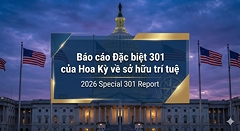
On April 30, 2026, the Office of the United States Trade Representative (USTR) released the 2026 Special 301 Report on the protection and enforcement of intellectual property (IP) rights among U.S. trading partners. In this report, Vietnam was designated as a “Priority Foreign Country” (PFC), representing the highest warning level under the Special 301 mechanism. This marks the first time in 13 years that the United States has imposed this highest warning level on a partner, with the previous case being Ukraine in the 2013 report.
According to the report, the USTR’s designation of Vietnam at the PFC level is based on five main areas of concern: ineffective enforcement against copyright infringement in the digital environment; inadequate enforcement against counterfeit and trademark-infringing goods; limited border enforcement mechanisms; a lack of significant enforcement actions regarding the use of unlicensed software within enterprises; and the absence of comprehensive criminal provisions for the unauthorized misappropriation of encrypted program-carrying cable and satellite signals.
This is a development that must be closely monitored, as depending on the results of consultations and assessments by the U.S. side, an investigation—if initiated—could be prolonged and may lead to adverse trade measures, including tariff actions. In practice, during President Donald Trump's first term, the United States conducted a Section 301 investigation against China starting in 2017 related to intellectual property, technology transfer, and innovation; the subsequent findings served as the basis for the U.S. to apply multiple rounds of additional tariffs on goods imported from China, and a significant portion of these measures have remained in effect in the years that followed.
However, the issue also needs to be viewed objectively, fairly, and constructively. In recent years, Vietnam has made significant efforts to improve its legal framework and enhance the enforcement of intellectual property rights, including amending the Law on Intellectual Property, strengthening inter-agency coordination in handling violations, and deploying inspection and review measures in the digital environment and in the circulation of goods. Official responses from Vietnam have also emphasized the request for the United States to provide a more objective, comprehensive, and balanced assessment of Vietnam’s efforts in protecting and enforcing intellectual property rights in recent times.
In that context, it is important to both proactively respond to risks and maintain a cooperative, dialogue-based, and transparent approach. For the business community, this is the time to strengthen the review of compliance with intellectual property laws across all production, business, and export activities, especially for enterprises with markets, partners, or supply chains closely linked to the United States.
In the immediate term, businesses need to urgently check the current state of internal compliance within their organizations, particularly regarding the issues mentioned by the USTR in the report. The review should start with the legality of the software being used in the enterprise; the use of images, trademarks, packaging, product styling/models, and promotional content; the origin and legal rights of use for data, designs, technical documents, digital works, and marketing content. Businesses should also focus on completing internal documentation proving the legal right of use or ownership of related intellectual property assets to minimize risks if explanation requests are made or disputes arise.
For businesses providing digital platform services, e-commerce, hosting services, data centers, social networks, or other intermediary infrastructures, it is necessary to proactively strengthen content control and seller vetting processes, strengthen mechanisms for receiving and processing complaints of intellectual property infringement, and promptly remove goods, online storefronts, or content with clear signs of violation. In high-risk cases, especially goods related to healthcare, food, dietary supplements, or websites with signs of providing pirated content on a large scale, businesses need to have early prevention measures and coordinate closely with competent authorities.
For businesses exporting to the United States, in addition to reviewing intellectual property compliance, it is necessary to continue promoting information transparency, digitalizing records, and improving traceability throughout the entire supply chain. This is not only a requirement for risk management in the event of adverse developments from the U.S. side but also an important condition for enhancing competitiveness and meeting the increasing requirements from the international market regarding compliance, origin, quality, and product transparency.
In the event the USTR decides to initiate an investigation, relevant businesses and industry associations should proactively participate in the process of .providing information, comments, and accounts of actual practice to the U.S. side through appropriate channels. Clarifying positive changes in business compliance practices, legal reforms, and enforcement efforts by Vietnamese state agencies will be of great significance in helping the assessment process more fully reflect the actual picture in Vietnam.
Furthermore, developments from the 2026 Special 301 Report also show the increasing requirements for Vietnamese enterprises to view intellectual property not only as a legal issue but also as a component of modern governance and long-term competitiveness. Investing in compliance, risk control, supply chain digitalization, standardizing internal processes, and diversifying markets will help businesses be more proactive in the face of unpredictable shifts in international trade policy in general and in the U.S. market in particular.
VCCI will continue to closely monitor related developments, coordinate with agencies, associations, and the business community to update information, synthesize recommendations, and support businesses in the response process. Together with the efforts of state agencies in dialogue and policy refinement, the proactivity engagement of businesses will be an important factor contributing to protecting the legitimate interests of the Vietnamese business community while strengthening Vietnam's image as a serious, responsible trading partner with an increasingly improved legal and business environment.
Source: The Center for WTO and International Trade - VCCI
The documents are attached below:
| Tải tài liệu | |
|---|---|
| 2026 Special 301 Report on Vietnam (Vietnamese) | |
| 2026 Special 301 Report on Vietnam (English) | |
| 2026 Special 301 Report (Full version, English) | |
Các tin khác
- U.S. to Impose Duties on Mexican, Thai, Vietnamese Chassis (03/06/2026)
- Mexican sugar producers push to scrap U.S. import quotas (03/06/2026)
- Japan launched an anti-dumping investigation into flat steel imports from three countries (03/06/2026)
- Eurochem challenges anti-dumping duties in the EU (03/06/2026)
- Pangasius prices in Viet Nam surge due to high export demand (03/06/2026)