Home
Home
 About Us



To be 85% self-sufficient in domestic steel needs
11/02/2026 04:31
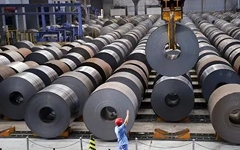
The goal by 2030 is to achieve an annual crude steel production of approximately 25 million tons and finished steel production of 32 million tons, meeting 80-85% of domestic demand and boosting exports.
Deputy Prime Minister Bui Thanh Son signed a decision approving the Strategy for the Development of the Steel Industry until 2030, with a vision to 2050, oriented towards improving quality, diversifying products, strongly shifting towards high value-added and environmentally friendly steel, increasing the ability to replace imported goods and participating deeply in the global value chain.
The target for 2030 is to achieve an annual crude steel production of approximately 25 million tons and finished steel production of 32 million tons, meeting 80-85% of domestic demand and boosting exports. By 2035, production is projected to further increase to 33 million tons of crude steel. The vision for 2050 is to reach approximately 75 million tons of finished steel per year, essentially meeting the maximum domestic demand.
The strategy prioritizes the development of alloy steel, stainless steel, and high-quality steel for mechanical engineering, transportation, energy, and defense; while simultaneously promoting modern technology, green steel, and investing in large-scale projects linked to the advantages of seaports and renewable energy.
To achieve its goals, the Strategy outlines groups of solutions related to policy mechanisms, market development, science and technology , human resources, and environmental protection.
This includes continued investment in upgrading technology and equipment for construction steel, alloy steel, structural steel, galvanized sheet metal, steel pipes, and hot-rolled steel. It also involves developing the production of high-strength steel plates, prestressed steel, corrosion-resistant stainless steel for offshore and island construction, lightweight steel for transportation, and steel for the shipbuilding industry.
The strategy also directs research and production of steel for energy infrastructure, rails for high-speed railways, seamless steel pipes for transporting liquefied gas, wind turbine towers, and fabricated steel for national defense and security.
With a long-term vision extending to 2050, Viet Nam's steel industry is expected to shift from extensive growth to a model based on technology, added value, and sustainable development, thereby enhancing its position in the global value chain.
Source: VTV
Các tin khác
- U.S. to Impose Duties on Mexican, Thai, Vietnamese Chassis (03/06/2026)
- Mexican sugar producers push to scrap U.S. import quotas (03/06/2026)
- Japan launched an anti-dumping investigation into flat steel imports from three countries (03/06/2026)
- Eurochem challenges anti-dumping duties in the EU (03/06/2026)
- Pangasius prices in Viet Nam surge due to high export demand (03/06/2026)