Home
Home
 About Us



The Philippines: Bakers Refute Anti-Dumping Petition
01/07/2013 12:00
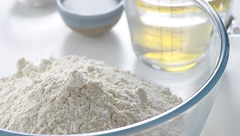
The Filipino-Chinese Bakery Association (FCBA) said that granting the local flour millers' petition for a 20 percent anti-dumping duty on imported flour from Turkey will only undermine the welfare of consumers and other flour-related industries aside from stifling competition of a cheaper supply source.
Benito Lim, FCBA president, told reporters in a chance interview that his organization will submit its position as an intervenor to the anti-dumping case filed by the Philippine Association of Flour Millers (PAFMIL) against imported Turkish flour on allegations that such importation has caused serious injury to the industry.
''We are going to submit our position on July 10,'' Lim said.
Based on its initial assessment, Lim said that the PAFMIL petition has a lot of loopholes both in substance and on the legal side of it.
On the issue of dumping, Lim said there are over 700 flour millers in Turkey so it is impossible to influence and dominate the export price. Importation of Turkish flour into the country is slapped with 7 percent tariff.
''Wheat importation in both the Philippines and Turkey is tariff-free to the benefit of the local millers,'' Lim added.
In the petition, PAFMIL also claimed that production has increased gradually in the last five years from 55,802 bags to 59,065; 62,663; 63976; and 64,634 bags.
While importation of flour has been increasing, Lim said that importation of flour only accounts for 9 percent of the total domestic market. Of the 9 percent share, Turkish flour accounts for only 7 percent.
''Republic Act 8752 or the Anti-Dumping Law is about serous injury that is imminent and not on the reduction in sale,'' Lim pointed out.
In addition, Lim said that RA 8752 Section 301(a) provides for the protection of the welfare of consumers and/or the general public and other related local industries.
Imposing 20 percent tariff duty on Turkish imported flour is not a healthy option because this would only mean raising the prices of flour because bakers have no other source of cheaper-priced flour since importers will have to stop importing. This means bakers will be forced to source from the expensive locally-milled flour.
''Our industry will always be at the mercy of the PAFMIL,'' Lim said.
Local flour millers dominate the industry with total market share of 89 percent and 9 percent by the imported flour.
Lim has surmised that the aim for the anti-dumping suit is for the millers to gain additional market share by shutting out imports.
PAFMIL did not even reduce prices of flour even if prices of wheat in the international market decreased and despite their advantage in the foreign exchange rate.
They cannot even justify their claim of serious injury that imminent upon them, Lim stressed. Lim further cited the profits reported by flour millers in the first quarter of this year.
''Should the Department of Agriculture and Tariff Commission allow the demand of PAFMIL, the answer is no because the elements of serious injury and imminent threat have not been established,'' Lim said.
He alleged that flour millers would just like to increase their earnings to the detriment of consumers, the general public, bakeries and other related flour users.
Instead, Lim said, the government should demand PAFMIL ''to reduce their excessive price and meet the market competition for the benefit and welfare of consumers.''
Mon, Jun 24, 2013
Source: ph.news.yahoo.com
Các tin khác
- Viet Nam's steel industry takes another step forward in the anti-dumping lawsuit against Chinese goods (17/06/2026)
- Türkiye launches anti-dumping probe into car tire imports (17/06/2026)
- TRA proposes extending anti-dumping measure on wire rod (17/06/2026)
- Ample room remains for Viet Nam–India logistics cooperation (17/06/2026)
- Local authorities to directly issue fragrant rice export certificates from July 2026 (17/06/2026)