Home
Home
 About Us



The extraordinary journey of Vietnamese catfish in Japan
20/03/2026 02:30
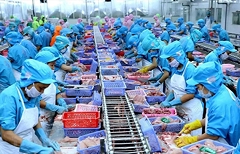
Successfully making its way onto the sushi conveyor belt is just the beginning. With the advantage of being boneless and having a competitive price, Vietnamese pangasius is opening its doors to "cover" the Japanese market through deep-processed products.
The end of 2025 marks a historic milestone that experts call "cultural integration": For the first time, Vietnamese pangasius will officially be included on the menu of Kura Sushi - one of the largest conveyor belt sushi restaurant chains in Japan with over 550 branches.
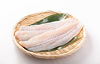
Vietnamese catfish added to Japanese sushi menus.
According to the Viet Nam Association of Seafood Processing and Export (VASEP), this is considered an important step in affirming the position of Vietnamese seafood in this demanding market.
Japanese customers appreciate the quality of pangasius: its white, smooth flesh and mild flavor, harmonizing well with wasabi and soy sauce, offer a refreshing experience compared to traditional fish used for sushi.
This isn't simply a story about selling a product. The acceptance of an imported farmed fish like pangasius as a topping for sushi—a quintessential Japanese delicacy—carries immense symbolic significance. It proves that the product has overcome the "firewall" of prejudice, no longer considered a second-rate substitute, but a legitimate ingredient with the quality and flavor to stand among the most refined dishes.
EDITOR'S NOTE
Half a century ago, Viet Nam emerged from war with a fragmented and highly dependent agricultural sector. Rice was then a matter of survival.
Today, rice has become an economic "passport." But the story doesn't end with agricultural exports; Viet Nam is embarking on a new path: exporting its agricultural practices.
From the rice paddies of the Mekong Delta, Viet Nam's agricultural production model is quietly "going further" than its borders. In Africa, once-abandoned lands have been reforested by short-duration rice varieties, water-saving farming techniques, and simple yet effective crop management methods.
From another perspective, the story of Cambodia's cashew industry reveals a broader "impact map" of Vietnamese agriculture.
Viet Nam is not just participating in the value chain; it is contributing to shaping it. This series of articles is being written in that context.
Part 1: Vietnamese experts transform barren land in Africa into a rice paddy laden with grain.
Part 2: The Vietnamese imprint behind the miraculous development of Cambodia's cashew industry.
According to fisheries experts, the history of Vietnamese pangasius in the Japanese market is a story of perseverance and innovation to overcome deep-seated cultural and consumer barriers.
Traditionally, the Japanese have a clear preference for seafood, especially wild-caught fish. They often show indifference, even skepticism, towards imported freshwater farmed fish products like pangasius. This psychological barrier is the biggest challenge that pangasius faced in its early days entering the market.
To achieve its current position, Vietnamese pangasius had to overcome one of the world's strictest Sanitary and Phytosanitary (SPS) control systems in Japan.
According to the leaders of Ben Tre Seafood Import-Export Joint Stock Company (ABT): To realize the dream of putting pangasius on the conveyor belt of Kura Sushi, the company had to establish unprecedented standards. More than just a frozen product, sushi-grade pangasius requires an absolutely "clean" farming process to completely eliminate the smell of seaweed and mud – the "fatal flaw" that often leads to freshwater fish being rejected at sashimi banquets.
But taste is only a necessary condition. The real technical barrier lies in the microbiological safety standards for raw consumption. According to ABT, the total aerobic bacteria (TPC) standard for this product line must be 100 times lower than that of conventionally exported pangasius fillets.
In addition, strict controls are in place to ensure the complete absence of harmful bacteria such as E. coli, Salmonella, and Staphylococcus. These are "narrow loopholes" that only businesses with advanced processing technology and standardized farming areas can exploit.
Sharing her thoughts on this historic milestone, Ms. Nguyen Thi Tra My - General Director of PAN Group (the parent company of ABT) - could not hide her pride: "From the Mekong Delta to the Japanese dinner table is a journey carrying the dedication of countless people. The successful conquest of the Kura Sushi chain by Vietnamese pangasius products is the most vivid proof that Vietnamese agricultural products are fully capable of overcoming the most demanding barriers. This is not only a joy for the company but also an important step forward, contributing to repositioning and elevating the status of Vietnamese pangasius on the world culinary map."
Tireless efforts to win over Japanese customers.
Why has Japan – a country that imports $15 billion worth of seafood annually – suddenly become so interested in Vietnamese pangasius? The answer lies in macroeconomic factors and the scarcity of traditional whitefish sources.
The Japanese market is under pressure from inflation and declining purchasing power. Consumers are increasingly price-sensitive. Meanwhile, popular whitefish species such as Alaskan pollock and cod – which are staple protein sources for the Japanese – are facing difficulties. These are wild-caught species, entirely dependent on quotas and seasonality, leading to uncertain supply and escalating prices.
Vietnamese pangasius has emerged as a perfect "lifesaver" thanks to three strategic advantages of the aquaculture industry: stable year-round supply, traceability, and especially competitive pricing.
Market data reveals a significant price difference: At supermarkets like AEON, a 280g pack of frozen pangasius fillets (ASC certified) retails for only about 398 JPY (approximately 2.70 USD). Meanwhile, the wholesale price of frozen cod can range from 980 JPY to 1,980 JPY/kg (approximately 6.5-13.2 USD/kg).
Ms. Le Hang, Deputy General Secretary of VASEP, analyzed: "The price of pangasius is only about one-third that of cod and salmon, especially for sushi products. Given that the Japanese economy is not expected to recover immediately, pangasius will continue to be a preferred alternative."
This disparity has helped pangasius fish rise from obscurity to prominence. In 2011, the total value of pangasius exports to Japan was only $2.56 million, accounting for just 0.14% of Viet Nam's total global pangasius exports. The period from 2011 to 2019 witnessed a spectacular transformation. Pangasius exports to Japan increased twelvefold.
This explosive growth is not accidental but the result of clearly targeted marketing and product development strategies.
One of the most significant milestones was the successful collaboration with AEON, one of Japan's largest retail groups. The fact that Vietnamese pangasius products met stringent quality standards not only secured their place on the shelves of hundreds of supermarkets across Japan but also helped build trust with the general public, who are very cautious about imported products.
By 2025, export turnover to Japan is expected to exceed 40 million USD. Notably, Japan acts as a "value anchor" by accepting a relatively high average import price (5.73-11.3 USD/kg) for value-added products, helping Vietnamese businesses balance their profit margins compared to lower-priced markets.
A bright future for pangasius in Japan.
Looking to the future, Japan is not just a consumer market, but a "laboratory" for value-added products (VAP) in the pangasius industry. And the recent inclusion of pangasius on the sushi menu of a Japanese restaurant chain marks a milestone in cultural integration.
According to the director of a seafood company in Can Tho, the fact that an imported farmed fish like pangasius is accepted in sushi at a major restaurant chain shows that the product has overcome all barriers of prejudice.
"Vietnamese pangasius is no longer seen as a cheap substitute but has been recognized as a legitimate ingredient, possessing the quality and flavor to stand out in one of the world's most demanding culinary formats," he said.
However, in an interview with Dan Tri newspaper, Ms. Le Hang, Deputy General Secretary of VASEP, said: Although pangasius has entered restaurant chains, the name "pangasius" may not appear directly on the menu. Restaurants often refer to it generally as sushi or use other trade names, because the term "pangasius" sometimes doesn't evoke the feeling of "fish" in the true sense for Japanese consumers who are accustomed to seafood.
"They don't put the name on the menu because Japanese consumers are often still hesitant about farmed catfish. This is both a marketing barrier and a tactic for the restaurant to keep prices low and for consumers to focus on actual quality rather than preconceived notions," Ms. Le Hang shared.
Nevertheless, the future of pangasius in Japan looks bright. Demographic trends, with an aging population and busy lifestyles, are reshaping how Japanese people eat fish. They need convenient, boneless products that are easy to prepare and come in small portions. Pangasius, with its white, tender flesh and lack of small bones, possesses the perfect "DNA" to meet this need.
Vietnamese businesses are shifting strongly from selling raw fish fillets to "tailor-made" products for Japanese consumers. These include imitation eel products (Kabayaki) – a strategic alternative as natural eels become increasingly scarce and expensive. Other examples include processed products like battered fish (Fish Karaage), fish cakes (surimi/kamaboko), and ingredient sets for bento boxes or izakaya restaurants.
The Japanese aquaculture market is projected to reach $6.67 billion by 2032. With its current growth trajectory, Vietnamese pangasius has every right to dream of a more secure position. From ponds in the Mekong Delta to the glamorous sushi conveyor belts in Tokyo, the journey of the pangasius fish is proof that when quality reaches the pinnacle, all preconceived notions and barriers can be overcome.
"The biggest challenge now is not finding customers, but maintaining consistency. Once we have partners, we must ensure we maintain good quality. Just one small mistake regarding antibiotic residue can close the market door at any time," a VASEP representative warned.
Unlike many markets, Japan applies a zero-tolerance maximum residue limit (MRL) regulation for antibiotics. This is the most difficult technical barrier.
For example, consider Doxycycline and Enrofloxacin (two antibiotics commonly used in aquaculture). While demanding markets like the EU allow residue levels of 100 ppb (equivalent to 0.1 mg/kg of product), Japan applies a limit of only 10 ppb.
This means that Japanese standards are 10 times stricter than European standards. A farming process that meets "EU standards" can still result in a shipment being destroyed at a Japanese port.
Source: Dan Tri News
Các tin khác
- U.S. to Impose Duties on Mexican, Thai, Vietnamese Chassis (03/06/2026)
- Mexican sugar producers push to scrap U.S. import quotas (03/06/2026)
- Japan launched an anti-dumping investigation into flat steel imports from three countries (03/06/2026)
- Eurochem challenges anti-dumping duties in the EU (03/06/2026)
- Pangasius prices in Viet Nam surge due to high export demand (03/06/2026)