Home
Home
 About Us


The economy in the first quarter of 2026 showed many clear positive signs
03/04/2026 05:52
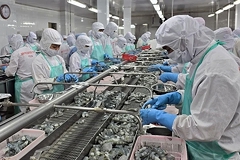
Despite facing numerous challenges, the Vietnamese economy in the first few months of the year recorded many positive signs from exports and imports, industrial production, and budget revenue.
The economic picture for the first quarter of 2026 concluded with many positive aspects, particularly in the areas of import-export and industrial production. These results not only reinforced market confidence but also created an important foundation for achieving high growth targets for the year.
According to experts, traditional growth drivers such as attracting foreign direct investment, government revenue, public investment, import and export activities, and the number of newly established businesses continue to be maintained in a positive state. These are important pillars helping the economy maintain a stable recovery momentum.
In particular, import and export activities stood out as a key highlight. From the beginning of the year to mid-March, total import and export turnover reached over 197 billion USD, an increase of 20.8% compared to the same period last year. Export turnover reached 96.8 billion USD, an increase of 17%, while import turnover reached 100.3 billion USD, an increase of 24.5%.
This development indicates that trade activity is accelerating in line with the production cycle. Exports continue to maintain positive growth, while imports are expanding strongly to fulfill orders and ensure supply chains for the coming months.
Furthermore, industrial production continued to maintain a fairly strong growth momentum. Notably, approximately 80% of new FDI inflows were concentrated in the processing and manufacturing industries. This contributed to improving production quality, creating jobs, and promoting sustainable economic restructuring.
In various localities, industrial production is showing positive signs. According to Mr. Nguyen Minh Quang, Deputy Head of the Industrial and Construction Statistics Department (Ho Chi Minh City Statistics Office), the industrial production index in Ho Chi Minh City in the first quarter is projected to increase by approximately 10-11% compared to the same period last year. Meanwhile, Hanoi continues to maintain its growth momentum, particularly in the processing and manufacturing sector.
The business sector has also seen significant improvement. The number of newly established businesses has increased sharply, while the number of businesses withdrawing has decreased relatively compared to before, indicating that the flow of businesses is gradually recovering, although not yet truly sustainable.
In the fiscal sector, state budget revenue recorded positive results. Total revenue is estimated at 820 trillion VND, equivalent to 32.4% of the projected figure and an increase of 10.2% compared to the same period last year. Of this, domestic revenue accounted for a large proportion with 738.6 trillion VND, an increase of 12.2%.
In addition, tourism was also a bright spot with a strong increase in international visitors. Hanoi alone welcomed over 8.8 million visitors in the first quarter, including 2.4 million international tourists, contributing to boosting consumption and services.
These results demonstrate that the economy's internal growth potential remains positive, continuing the recovery momentum from the previous year. At the same time, many international organizations have also raised their growth forecasts for Vietnam, reflecting confidence in the region's economic prospects.
Stability achieved through proactive and flexible management.
Despite many positive signs, the economy is still facing considerable pressure, particularly from external fluctuations and rising input costs.
One notable factor is the impact of geopolitical conflicts, which has led to a surge in fuel prices. This is an essential commodity, directly affecting production, transportation, and consumption costs, and putting pressure on overall price levels and inflation control targets.
Simultaneously, sharply rising logistics costs are also adding to the burden on businesses. The cost of shipping a container of goods from the US to Vietnam has nearly doubled, from $1,500-$2,000 to approximately $3,000-$3,500.
Not only transportation costs, but also expenses for warehousing, distribution, and goods circulation have increased. The total input costs for businesses have risen by approximately 20-30%, directly impacting product prices and competitiveness.
Against this backdrop, to ensure double-digit GDP growth in 2026, Dr. Nguyen Quoc Viet, a public policy expert from the School of Economics - Vietnam National University, Hanoi, believes that the first factor to focus on is macroeconomic stability and building a transparent, open, and low-cost business environment that facilitates business operations.
In fact, with the Politburo's directive in Conclusion No. 14-KL/TW on ensuring stable fuel supply and prices in the new situation, the government's management, and the solutions of ministries and agencies... solutions have been decisively implemented to respond to external energy fluctuations.
At the meeting to implement Conclusion No. 14 on the afternoon of March 21, in light of the complex and unpredictable global oil crisis, Prime Minister Pham Minh Chinh emphasized four major goals: Absolutely no shortage of energy in general, and petroleum in particular, for production, business, and consumption under any circumstances; consideration must be placed within the overall context of socio-economic development, maintaining political stability, social order and security, and improving the material and spiritual lives of the people; serving double-digit growth in 2026 and subsequent years; and managing potential risks.
In fact, to stabilize the macroeconomic situation and facilitate business operations, the Government and ministries have taken very decisive actions in recent times. Specifically, in response to the complex and rapidly fluctuating global oil prices due to geopolitical tensions in the Middle East, the Government and the Joint Ministry of Industry and Trade - Finance have implemented well-coordinated management solutions, helping to stabilize domestic oil prices quickly.
Previously, to support the double-digit growth target in 2026, the Government issued Resolution 01/NQ-CP on socio-economic development and the state budget estimate for 2026. Resolution 01/NQ-CP requires all levels, sectors, and localities to focus on directing and managing the implementation of the national GDP growth target for 2026, striving for 10% or more, while maintaining macroeconomic stability, controlling inflation, and ensuring major balances; promoting the strength of unity, constantly innovating, being bold and decisive, confident, self-reliant, and strategically independent.
Along with that is a high level of determination, great effort, and decisive action under the theme "Discipline and responsibility; proactive and effective; innovation; accelerated breakthroughs; sustainable growth." The resolution also calls for the implementation of groups of solutions; focusing on comprehensively improving institutions and laws, enhancing the effectiveness of law enforcement; and promoting the reduction and simplification of administrative procedures, and improving the investment and business environment.
Source: Vietnam.vn
Các tin khác
- U.S. to Impose Duties on Mexican, Thai, Vietnamese Chassis (03/06/2026)
- Mexican sugar producers push to scrap U.S. import quotas (03/06/2026)
- Japan launched an anti-dumping investigation into flat steel imports from three countries (03/06/2026)
- Eurochem challenges anti-dumping duties in the EU (03/06/2026)
- Pangasius prices in Viet Nam surge due to high export demand (03/06/2026)