Home
Home
 About Us


Solution to cope with anti-tax evasion against plywood products
17/08/2020 12:00
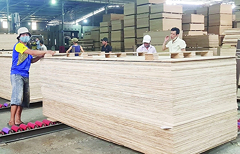
Recently, the US conducted an anti-tax evasion investigation of anti-dumping tax and anti-subsidy for plywood products originating from Vietnam. On the Vietnamese side, there have been many efforts to eliminate enterprises that facilitate fraud and do illegal business on this issue, protecting the genuine manufacturing industry.
Mr. Cao Chi Cong, Deputy Director of the Vietnam Administration of Forestry (Ministry of Agriculture and Rural Development), said that from January 4, 2018, the United States imposed anti-dumping tax from 171-183.36%, anti-subsidy tax from 22 -194.8% for orders of decorative plywood with hardwood (tropical wood) and some imported veneer sheets from China.
With Vietnam, on June 9, 2020, the United States Department of Commerce (DOC) initiated an investigation of anti-dumping,anti-tax evasion and anti-subsidy which is applied to Chinese plywood products imported from Vietnam.
"The US investigation into Vietnamese plywood products is the investigation of product origin," Mr. Cong said.
Mr. Ngo SyHoai, Deputy Chairman and General Secretary of the Vietnam Timber and Forest Products Association, said that the volume of plywood exported to the US is quite large, and many products have high value. Therefore, if the US imposes tax, it will cause serious effects, even "killing" the whole industry.
"However, the US initiated the investigation with a fairly good attitude, asserting that this was only aimed at “hitting” Chinese producers and exporters that were being imposed by the US with evasive actions, not “aiming”at Vietnamese enterprises. Hopefully it will not investigate all Vietnamese enterprises exporting plywood to the US,”said Mr. Hoai.
From the perspective of the Customs agency, Ms. Nguyen Pham Nhu Ha, Deputy Head of Division 4, Customs Supervision and Control (General Department of Customs), said from the time of the China-US trade war, the General Customs Department has actively controlled export goods with suspicions of fraud and evasion of anti-dumping tax. Wood products are some of the many items that the General Department of Customs focuses its resources on checking and monitoring for origin fraud.
From April to July 2020, the General Department of Customs discussed with the Vietnam Timber and Forest Products
Association the list of enterprises with suspicion of fraud. In addition, the General Department of Customs currently has a topic of investigation against plywood tax evasion and has identified a number of suspicious enterprises and is conducting inspection and verification. The Post-clearance Inspection Department (General Department of Customs) has sent a document to the Vietnam Timber and Forest Products Association to make the list of suspicious enterprises to avoid manyinspections.
Eliminate illegal enterprises
Representatives of some plywood exporting enterprises said that in 2018 there was a trendof FDI enterprises involving in origin fraud. They imported Chinese plywood to Vietnam, then re-exported it to the United States. Authorities have commented, but if the enterprises werefined is not clear.
According to Mr. Ngo SyHoai: “We should be cautious, not all FDI enterprises are cheating, so we should not criticize FDI enterprises. If any FDI enterprises do the right thing, they should be welcomed, and if they dowrong, they will be punished. The Association recommends localities to eliminate illegal enterprises.”
The representative of the Import-Export Department (Ministry of Industry and Trade) said: “Previously, there was a sudden increase in plywood exports in some enterprises, but now these enterprises have been closed. It is not known that after the removal of these enterprises, whether the owner has moved to another enterprise or not, this is very difficult to follow.
Currently, the Department of Trade Protection (Ministry of Industry and Trade), although working with enterprises, it has not seen any clear signs of fraud of enterprises. If the investigation finds out that the company shows signs of fraud, it will resolutely handle and vice versa, make every effort to protect the right enterprises.”
Deputy Minister of Agriculture and Rural Development Ha Cong Tuan emphasized that the US announced the initiation of an investigation against tax evasion, but only on a few enterprises, not all enterprises. Vietnam is determined to fight this tax evasion and fraud issue. The Forest Protection Department must direct the entire inspection and handling of timber origin violations; it is necessary to discourage and rectify the issue, and also let the US see that Vietnam is working seriously.
Mr. Le ThanhHoa, Deputy Director of the Agricultural Product Processing and Market Development Department (Ministry of Agriculture and Rural Development),said in order to monitor the source of raw materials for export as well as output products, many countries around the world apply a method of assessing the production conditions as well as the capacity of each factory, on that basis determine the output of each factory, controlling exports.
“When the management of the plywood processing factory is in the same direction, it is required that enterprises have full records of input materials and origin. Vietnam participates in many FTAs that require traceability. If we do not do this, it will be very difficult to prove the product’s origin,” Mr. Hoa said.
Mr. Cao Chi Cong, Deputy Director of the Vietnam Administration of Forestry (Ministry of Agriculture and Rural Development), said that from January 4, 2018, the United States imposed anti-dumping tax from 171-183.36%, anti-subsidy tax from 22 -194.8% for orders of decorative plywood with hardwood (tropical wood) and some imported veneer sheets from China.
With Vietnam, on June 9, 2020, the United States Department of Commerce (DOC) initiated an investigation of anti-dumping,anti-tax evasion and anti-subsidy which is applied to Chinese plywood products imported from Vietnam.
"The US investigation into Vietnamese plywood products is the investigation of product origin," Mr. Cong said.
Mr. Ngo SyHoai, Deputy Chairman and General Secretary of the Vietnam Timber and Forest Products Association, said that the volume of plywood exported to the US is quite large, and many products have high value. Therefore, if the US imposes tax, it will cause serious effects, even "killing" the whole industry.
"However, the US initiated the investigation with a fairly good attitude, asserting that this was only aimed at “hitting” Chinese producers and exporters that were being imposed by the US with evasive actions, not “aiming”at Vietnamese enterprises. Hopefully it will not investigate all Vietnamese enterprises exporting plywood to the US,”said Mr. Hoai.
From the perspective of the Customs agency, Ms. Nguyen Pham Nhu Ha, Deputy Head of Division 4, Customs Supervision and Control (General Department of Customs), said from the time of the China-US trade war, the General Customs Department has actively controlled export goods with suspicions of fraud and evasion of anti-dumping tax. Wood products are some of the many items that the General Department of Customs focuses its resources on checking and monitoring for origin fraud.
From April to July 2020, the General Department of Customs discussed with the Vietnam Timber and Forest Products
Association the list of enterprises with suspicion of fraud. In addition, the General Department of Customs currently has a topic of investigation against plywood tax evasion and has identified a number of suspicious enterprises and is conducting inspection and verification. The Post-clearance Inspection Department (General Department of Customs) has sent a document to the Vietnam Timber and Forest Products Association to make the list of suspicious enterprises to avoid manyinspections.
Eliminate illegal enterprises
Representatives of some plywood exporting enterprises said that in 2018 there was a trendof FDI enterprises involving in origin fraud. They imported Chinese plywood to Vietnam, then re-exported it to the United States. Authorities have commented, but if the enterprises werefined is not clear.
According to Mr. Ngo SyHoai: “We should be cautious, not all FDI enterprises are cheating, so we should not criticize FDI enterprises. If any FDI enterprises do the right thing, they should be welcomed, and if they dowrong, they will be punished. The Association recommends localities to eliminate illegal enterprises.”
The representative of the Import-Export Department (Ministry of Industry and Trade) said: “Previously, there was a sudden increase in plywood exports in some enterprises, but now these enterprises have been closed. It is not known that after the removal of these enterprises, whether the owner has moved to another enterprise or not, this is very difficult to follow.
Currently, the Department of Trade Protection (Ministry of Industry and Trade), although working with enterprises, it has not seen any clear signs of fraud of enterprises. If the investigation finds out that the company shows signs of fraud, it will resolutely handle and vice versa, make every effort to protect the right enterprises.”
Deputy Minister of Agriculture and Rural Development Ha Cong Tuan emphasized that the US announced the initiation of an investigation against tax evasion, but only on a few enterprises, not all enterprises. Vietnam is determined to fight this tax evasion and fraud issue. The Forest Protection Department must direct the entire inspection and handling of timber origin violations; it is necessary to discourage and rectify the issue, and also let the US see that Vietnam is working seriously.
Mr. Le ThanhHoa, Deputy Director of the Agricultural Product Processing and Market Development Department (Ministry of Agriculture and Rural Development),said in order to monitor the source of raw materials for export as well as output products, many countries around the world apply a method of assessing the production conditions as well as the capacity of each factory, on that basis determine the output of each factory, controlling exports.
“When the management of the plywood processing factory is in the same direction, it is required that enterprises have full records of input materials and origin. Vietnam participates in many FTAs that require traceability. If we do not do this, it will be very difficult to prove the product’s origin,” Mr. Hoa said.
Source: VN Explorer
Các tin khác
- Anti-dumping measures on steel remained a common tool in 2025 – OECD (08/06/2026)
- Exporters urged to enhance traceability in response to proposed US tariffs (08/06/2026)
- Viet Nam’s early-season fresh lychees win over the US market (08/06/2026)
- New challenges for export businesses (08/06/2026)
- Tariff risks push Viet Nam to post record deficit (08/06/2026)