Home
Home
 About Us



Renewable energy, EU antidumping & the end of a ‘green bubble’
19/06/2014 12:00
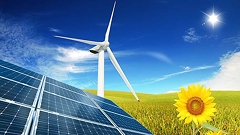
Over the last decade, the EU’s decisions to impose antidumping duties have mainly benefited Europe’s metals and chemical sectors. A good third of the antidumping duties imposed target Chinese exports. But now, renewables are the new kid on the bloc and they don’t only target China. It’s all a tale of subsidies that has created a new powerful and defensive lobby in the renewables industry.
In 2013, the EU imposed antidumping duties on Chinese solar panels and solar glass. This move was extremely contentious and divided EU members states. China and the EU Commission managed to come to an agreement by which China agrees to sell to the EU at a minimum set price of 56 euro cents a watt and within an annual volume limit of 7 gigawatts until the end of 2015.
That same year, the EU imposed antidumping duties on bioethanol from the United States, and on biodiesel from Argentina (24.6% additional rate on the value of imports) and Indonesia (18.9%).
Most of these cases are coming home to roost in the WTO, and the last few weeks have seen a series of interesting announcements.
ProSun, the solar power lobby, accused certain Chinese firms of selling on the EU market below the agreed market prices. If confirmed, such a violation could lead to the EU’s withdrawal from the bilateral agreement with China. China for its part announced it is considering re-igniting the case at the WTO’s dispute settlement body, case over which Beijing had initiated proceedings in 2012. But it subsequently dropped them as the country came to an arrangement with Brussels.
Indonesia decided to bring its case to the WTO this week. Argentina has brought its case to the WTO earlier, and had a dispute settlement panel established last April.
The push for renewable energy has had unpalatable side-effects on the political economy of energy in Europe and elsewhere, as renewables policy mutated into a new form of ‘crony capitalism’.
In Europe the pattern is clear: the EU’s energy policy of 2009 has set binding targets for the production renewable energy (20% renewables in electricity generation by 2020, and 10% biofuels). EU member states were given the green light to subsidise these industries to get them started. The result was a “green energy bubble”.
The solar power “bubble” burst with the onset of the sovereign debt crisis. Germany was the first to pull the trigger on EU solar industry subsidies in 2009. Italy, Spain, France and other countries have also significantly scaled down their support schemes on renewable energy, thereby hitting the artificially inflated solar power industry.
Meanwhile China discovered it could bring scale to the production of expensive solar panels and thus reduce their prices. But its own governments (local ones included) subsidied the industry lavishly to boost jobs and export capacity. These two factors combined, with the fragility of the EU’s solar industry, could only come to a head.
China in the meantime has reduced its own solar power subsidies, realising that its subsidy policy had led to overcapacities in the global market, and not avoided the bankruptcy of one of its major solar power players, SunTech.
The biofuels trade friction saga follows a similar pattern.
According to research undertaken by the International Institute for Sustainable Development (IISD), the EU’s biofuels industry received between EUR 5.5 and 6.9 billion in worth of subsidies 2011 alone. That same year , ethanol was subsidised between 15 and 21 euro cents per litre and biodiesel at between 32 and 39 euro cents per litre. According to the IISD, the subsidies have not only favoured EU sugar producers, but also foreign suppliers of inputs for biofuels.
Subsidies or no subsidies, it appears that other producers of biofuels like Brazil, Argentina, Indonesia, are more competitive than the European biofuel industry. In the meantime, the EU itself as well as its member states have started reconsidering their own biofuel support measures, for both financial and environmental reasons, as biofuels have been criticised for competing with food staple production and for ruining soils. Result? Trade frictions, antidumping duties, a WTO case, and much political acrimony.
Whereas the US are unhappy with the EU’s imposition of antidumping duties on its bioethanol, Washington has not filed a case against the EU in the WTO because the US are themselves have been embroiled in biofuel trade disputes with Brazil and are also imposing antidumping duties on Chinese solar panels… whilst bringing India to court in the WTO over its own antidumping practices on solar panels.
The EU Commission issued new guidelines on subsidies on renewable energy. Whilst these moves can also explain why renewables industries have sought protection through EU antidumping mechanisms, this is also the beginning of a normalisation of the EU’s renewables industry. On biofuels the saga could likely last longer than the one on solar power, as biofuels policy is enmeshed with the EU’s subsidy-heavy Common Agricultural Policy.
The most frightening aspect of European renewables subsidies is that it has created a powerful lobby that is capable of inducing protectionist policies that add fuel to already difficult relationships with partners like China or Argentina (NB: renewables are not the only powerful energy lobby buttressed by subsidies – but this is another topic). Antidumping cases on renewables will only end once the renewables industry has consolidated and functions on normal market terms.
Source: borderlex.eu
Các tin khác
- Viet Nam's steel industry takes another step forward in the anti-dumping lawsuit against Chinese goods (17/06/2026)
- Türkiye launches anti-dumping probe into car tire imports (17/06/2026)
- TRA proposes extending anti-dumping measure on wire rod (17/06/2026)
- Ample room remains for Viet Nam–India logistics cooperation (17/06/2026)
- Local authorities to directly issue fragrant rice export certificates from July 2026 (17/06/2026)