Home
Home
 About Us



Obama to Press Abe on Opening Japan to U.S. Automakers
22/02/2013 12:00
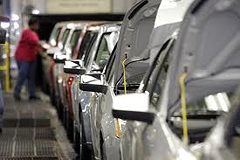
President Barack Obama won’t back off demands that Japan ease barriers for U.S. automakers before joining negotiations for a regional Pacific trade agreement when he meets today with Japanese Prime Minister Shinzo Abe, White House aides said.
A more open market for companies such as Ford Motor Co. (F), General Motors Co. (GM) and Chrysler Group LLC remains “an important pre-condition” to Japan’s potential entry into a proposed trade pact known as the Trans-Pacific Partnership, said Mike Froman, Obama’s deputy national security adviser for international economic affairs.
The partnership “is intended to be a comprehensive, ambitious, high-standard, 21st-century trade agreement,” Froman said on a conference call with reporters. “And anybody who joins TPP would be expected to sign on to that goal.”
Trade and security issues will be prime topics for the two leaders at their White House meeting. Abe, whose Liberal Democratic Party won a landslide victory in December’s general election, arrived in Washington last night. He is seeking to bolster the U.S.-Japan alliance as China’s growing economic and military clout has led to disputes over territory and North Korea shows no signs of easing its nuclear ambitions.
The Trans-Pacific Partnership is being negotiated among the U.S. and 10 other Pacific nations with the aim of bringing down tariffs, strengthening patent protection and allowing greater access to government contracts.
Automaker Pressure
Froman said he expected the two leaders to “review the status” of consultations about Japan’s interest and the U.S. insistence that all participants meet the standards for lowering trade barriers to be part of the accord.
Joe Hinrichs, Ford’s president of the Americas, urged Obama to use the meeting to press Abe to open the Japanese auto market and refrain from weakening the yen.
Obama should “send a clear message that any future trade policy with Japan must ensure a level playing field and not come at the expense of American workers,” Hinrichs told workers yesterday at an engine plant in Brook Park, Ohio.
Less than 4 percent of auto sales in Japan last year were brands from companies based outside the country, Hinrichs said.
Abe, 58, has said he won’t join negotiations on the TPP if Japan is required to abolish tariffs across the board.
Currency Issue
Another concern for U.S. companies is the slide in Japan’s currency. The yen set a record with 12 weeks of consecutive declines against the dollar and has tumbled 14 percent from mid- November. The currency strengthened 0.5 percent to 93.11 per dollar at 5 p.m. yesterday in New York.
Froman declined to say whether the two leaders would discuss currency valuations at their meeting.
Japan, the world’s third-largest economy, is struggling to escape three quarters of contraction through December and 15 years of falling prices. Abe has pushed the central bank to be more aggressive in combating deflation, and will replace the Bank of Japan (8301) governor and his two deputies next month.
Investors are cheering Abe’s policies. The Nikkei (NKY) 225 Stock Average is up about 24 percent in three months, the largest gain in 18 global stock market indexes tracked by Bloomberg.
Another issue under discussion will be energy. Abe will ask Obama to allow exports of shale gas to Japan, which is grappling with soaring energy costs after the country’s reactors were closed after the 2011 Fukushima nuclear disaster.
Gas Exports
Surging output from shale fields has depressed the cost of U.S. gas to about 20 percent of Asian prices. The U.S. has only approved one export plant for shipments to countries without a free-trade agreement.
Froman declined to say whether the U.S. would approve a request for gas exports to Japan. The Department of Energy is reviewing applications for gas exports and that process isn’t finished, he said.
Both countries are trying to enhance defense cooperation. Japan’s conflict with China over uninhabited islands has fueled concerns among American officials that the feud might escalate. In dealing with North Korea, Abe and Obama are seeking stronger global sanctions against North Korea for its most recent nuclear test.
Japan is “a key pillar of the president’s Asia rebalancing strategy,” said Daniel Russel, senior director for Asia on the White House’s National Security Council.
The two leaders “will certainly be discussing” North Korea’s “provocative” actions, Russel said. He said Obama will welcome hearing Abe’s assessment of the dispute with China over the islands.
Military Spending
Abe is increasing Japan’s military’s budget for the first time in more than a decade. His administration began talks with the U.S. last month on updating joint defense guidelines dealing with threats to or near Japan.
Tensions have risen around the islands known as Senkaku in Japan and Diaoyu in China where ships and planes from both sides have tailed one another for months. Japan accused China of using weapons-targeting radar last month on a Japanese destroyer and helicopter in nearby waters.
The uninhabited islands lie in an area of the East China Sea rich in fish, oil and natural gas. Japan’s purchase of three of the islands in September prompted violent protests in China that damaged Japanese businesses.
Feb 21, 2013 11:54 PM GMT
By Mike Dorning & Isabel Reynolds
Source: Bloomberg.com
Các tin khác
- Viet Nam's steel industry takes another step forward in the anti-dumping lawsuit against Chinese goods (17/06/2026)
- Türkiye launches anti-dumping probe into car tire imports (17/06/2026)
- TRA proposes extending anti-dumping measure on wire rod (17/06/2026)
- Ample room remains for Viet Nam–India logistics cooperation (17/06/2026)
- Local authorities to directly issue fragrant rice export certificates from July 2026 (17/06/2026)