Home
Home
 About Us


Maintaining import and export activity amidst global market fluctuations
18/03/2026 10:02
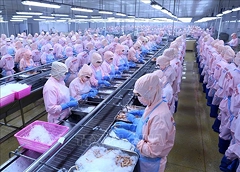
Amidst global trade challenges stemming from geopolitical tensions, fluctuating energy prices, and rising logistics costs, Viet Nam's import and export activities face significant pressure. However, according to Mr. Nguyen Anh Son, Director of the Import-Export Department (Ministry of Industry and Trade), positive signals in the first two months of 2026 indicate that Viet Nam's trade continues to grow, while also implementing measures to adapt to international market fluctuations.
Middle East conflicts and the risk of supply chain disruptions.
In the early months of 2026, global trade continued to be impacted by numerous unpredictable factors. Geopolitical tensions in several regions, particularly the Middle East, are driving up energy prices and logistics costs, creating significant challenges for international supply chains.
According to Mr. Nguyen Anh Son, Director of the Import-Export Department ( Ministry of Industry and Trade ), military developments in the Middle East, especially in the Gulf region, could significantly impact the global supply chain. Approximately 20% of the world's oil and gas is transported through these vital shipping lanes. Therefore, when conflict occurs, energy prices tend to fluctuate sharply.
Furthermore, escalating tensions could disrupt international shipping, leading to shortages of empty containers, transshipment bottlenecks, and increased transportation costs. Even if the conflict ends soon, the consequences of supply chain disruptions can still linger because the transportation system needs time to return to normal .
According to regulatory authorities, these fluctuations not only affect Viet Nam but also impact the trade activities of many countries around the world. In the context of global supply chains still undergoing restructuring after numerous shocks, import and export businesses will face greater costs and risks.
Efforts to maintain export growth targets.
According to Mr. Nguyen Anh Son, Director of the Import-Export Department (Ministry of Industry and Trade), despite facing many challenges, statistics show that Viet Nam's trade picture in the first two months of 2026 still recorded positive signs.
According to data from the Customs Department (Ministry of Finance), export turnover reached US$76.39 billion, an increase of approximately 18.3% compared to the same period in 2025.
In terms of export structure, 13 product categories achieved export value exceeding 1 billion USD, with 5 product groups exceeding 5 billion USD, demonstrating that many of Viet Nam's key industries continue to maintain their competitiveness and position in the international market.
Conversely, import turnover in the first two months of the year reached nearly 80 billion USD, an increase of more than 26% compared to the same period last year, resulting in a trade deficit of approximately 3 billion USD. However, according to Mr. Nguyen Anh Son, this is not a cause for concern.
Viet Nam is a highly open economy, with approximately 200% of GDP open, therefore the trade balance can fluctuate according to production and export cycles. In fact, in the last months of 2025, many businesses boosted exports to meet consumer demand during Christmas and New Year in major markets.
Entering the beginning of 2026, export activity slowed down somewhat, while businesses increased imports of raw materials, energy, components, and spare parts to prepare for production and business plans in the first quarter and the entire year. This caused import turnover to increase faster than export turnover in the early part of the year.
Therefore, the current trade deficit reflects the demand for imported inputs for production, thereby showing that Viet Nam's production and export activities are still operating positively.
According to the head of the Import-Export Department, achieving an export growth target of approximately 15-16% in 2026 is a major challenge given rising logistics costs and ongoing global trade uncertainties. Therefore, improving market forecasting and warning capabilities is essential for management agencies and businesses to promptly adjust their production and business plans.
In addition, coordination is needed among various agencies such as the Ministry of Industry and Trade, the Ministry of Agriculture and Environment, the Ministry of Finance, the State Bank of Viet Nam, and the Ministry of Construction to develop comprehensive solutions related to transportation, finance, foreign exchange, and supply chains.
Besides boosting exports, flexible management between production, exports, and domestic consumption is also considered a crucial solution. In the event of export difficulties, promoting domestic consumption will help reduce inventory pressure and maintain cash flow for businesses.
Furthermore, according to Mr. Nguyen Anh Son, foreign trade management tools can also be used flexibly to regulate the import and export pace in each period, contributing to ensuring that goods of businesses and farmers are not stockpiled, while maintaining stability in production and trade activities.
Source: Tin Tuc News
Các tin khác
- U.S. to Impose Duties on Mexican, Thai, Vietnamese Chassis (03/06/2026)
- Mexican sugar producers push to scrap U.S. import quotas (03/06/2026)
- Japan launched an anti-dumping investigation into flat steel imports from three countries (03/06/2026)
- Eurochem challenges anti-dumping duties in the EU (03/06/2026)
- Pangasius prices in Viet Nam surge due to high export demand (03/06/2026)