Home
Home
 About Us



India’s anti-dumping duty levy on PVC suspension expires without govt notification
16/02/2022 11:13
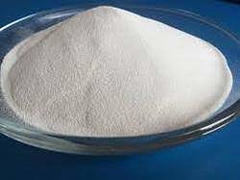
With no review petition filed by primary producers or no extension notification issued by the government, the anti-dumping duty (ADD) imposed on the suspension grade polyvinyl chloride (PVC) stands expired.
This means, nearly eight years old ADD on Homopolymer of vinyl chloride monomer (suspension grade) is withdrawn which is expected to boost its supply in India and benefit the downstream producers immensely. Indian PVC producers, however, can see the pressure on the sale of their products as the consumer industry may prefer to import if the imported polymer works out to cheaper than the price quoted by domestic producers. Last month, India had revoked ADD on PVC Flexi films.
The Ministry of Finance under the government of India had levied ADD between $29.99 and $147.96 per tonne of Homopolymer of vinyl chloride monomer (suspension grade), depending upon producers across China, Thailand, and the United States of America. The ADD was imposed first on Homopolymer of vinyl chloride monomer (suspension grade) on June 13, 2014, for five years initially to protect the interest of local companies and prevent cheap dumping into India, and eventually damage to the domestic producers. The ADD was later extended periodically.
India’s finance ministry had on August 10, 2019, extended the ADD for 30 months which got expired on February 12, 2022, in absence of any extension granted by the government. Even domestic producers did not raise their concerns which can justify any damage post-removal of ADD.
“India’s Finance Ministry had in the last notification issued dated August 10, 2019, extended validity of ADD levy for 30 months which expired on February 12, 2022. There was no notification thereafter from the Ministry of Finance or any constitutional body. This means, the government wanted ADD to expire, probably there was no dumping of Homopolymer of vinyl chloride monomer (suspension grade) from any exporter either from China, Thailand, or United States. Now, Indian user industries can import Homopolymer of vinyl chloride monomer (suspension grade) if the imported costs favour the move,” said a senior official with one of India’s largest PVC producing companies.
Earlier, the Indian government found that Homopolymer of vinyl chloride monomer (suspension grade) was exported into India from China, Thailand, and United States at dumped prices.
India produces around 1.5 million tonnes of all grades of PVC including Homopolymer of vinyl chloride monomer (suspension grade). But, the locally produced polymer remains insufficient to meet the country’s growing needs. Hence, India imports around 2 million tonnes of all grades of PVC to meet its burgeoning demand, especially from China, Thailand, and the United States.
While its import from China and Thailand continued even during ADD levy period albeit in a very small quantity, import from the United States completely stopped due mainly to the scarcity of this polymer there. PVC production was disrupted in the United States due to the outbreak of the coronavirus (Covid) pandemic in the last two years. But growing demand from the local plastic industry there left a little exportable surplus. Over and above, the itching freight rates prompted Indian users to source Homopolymer of vinyl chloride monomer (suspension grade) from alternative suppliers in the vicinity,” said another senior official of a PVC producing company.
The official, however, showed disappointment over the Indian government’s inaction on further ADD extension. He further said that its import may not be possible at the current price which has surged by 8-10 percent after traders in China returned to the market after the Chinese New Year holiday (February 1, 2022).
“The impact of ADD expiry will depend upon the rate at which the Chinese exporter sells their Homopolymer of vinyl chloride monomer (suspension grade) to Indian importers. PVC prices have risen in India also with no import benefit possible at this point in time. We don’t envisage either China, Thailand or the United States will export PVC to India at a dumped price. But, Chinese suppliers can’t be believed blindly. They can change their stance any moment and thus, supply can start immediately,” said an industry official.
The freight rate between China and India works out to $280-300 a tonne. In India, therefore, the domestic producers should offer PVC at a competitive price to imports.
User industry, by contrast, cheers expiration of ADD as it will open options for Homopolymer of vinyl chloride monomer (suspension grade) import from China and other countries which offer a lower price.
“It’s always better to have more options so that we can import the raw material if that works out to cheaper than the prevailing prices in the domestic markets. Opening up import markets will allow us to procure raw materials cheaper which will pull down our cost of production. Chinese exporters always offer products at 8-10 percent lower than the price quoted by Indian producers,” said Surendra Sharda, Director, Accura Polyplast Pvt Ltd, an Ahmedabad–based producer of BLP pipes and fittings.
In the last two weeks, prices of all polymers in China have jumped by 5-10 percent on robust demand coming in from local consumer industries and revival in export sentiment post-global economic recovery. Primary producers in India have also raised PVC prices in a similar proportion following the global movement.
Source: PU
Các tin khác
- U.S. to Impose Duties on Mexican, Thai, Vietnamese Chassis (03/06/2026)
- Mexican sugar producers push to scrap U.S. import quotas (03/06/2026)
- Japan launched an anti-dumping investigation into flat steel imports from three countries (03/06/2026)
- Eurochem challenges anti-dumping duties in the EU (03/06/2026)
- Pangasius prices in Viet Nam surge due to high export demand (03/06/2026)