Home
Home
 About Us


India Imposes Anti-dumping Duty on Phosphoric Acid from Korea
24/08/2020 12:00
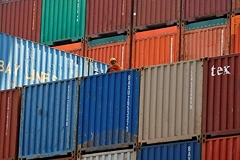
India on Friday imposed anti-dumping obligation on phosphoric acid from Korea for 5 years with a view to protect home producers from low cost imports. The obligation was imposed after the Commerce Ministry’s investigation arm Directorate General of Trade Remedies (DGTR) concluded in its probe that continued dumping of ‘Phosphoric Acid of all grades and concentrations (excluding Agriculture or Fertilizer grade)’ from Korea was impacting home trade.
“The anti-dumping duty (USD 137 per metric tonne) imposed under this notification shall be effective for a period of five years (unless revoked, superseded or amended earlier) from the date of publication of this notification…and shall be paid in Indian currency,” the Department of Revenue stated in a notification. In worldwide commerce parlance, dumping occurs when a rustic or a agency exports an merchandise at a worth decrease than the worth of that product in its home market.
Dumping impacts worth of that product within the importing nation, hitting margins and income of producing corporations. According to international commerce norms, a rustic is allowed to impose tariffs on such dumped merchandise to supply a level-playing subject to home producers. The obligation is imposed solely after a radical investigation by a quasi-judicial physique, similar to DGTR, in India.
Imposition of anti-dumping obligation is permissible underneath the World Trade Organization (WTO) regime. Korea is a key buying and selling companion of India. The obligation is geared toward guaranteeing fair buying and selling practices and making a level-playing subject for home producers vis-a-vis international producers and exporters.
“The anti-dumping duty (USD 137 per metric tonne) imposed under this notification shall be effective for a period of five years (unless revoked, superseded or amended earlier) from the date of publication of this notification…and shall be paid in Indian currency,” the Department of Revenue stated in a notification. In worldwide commerce parlance, dumping occurs when a rustic or a agency exports an merchandise at a worth decrease than the worth of that product in its home market.
Dumping impacts worth of that product within the importing nation, hitting margins and income of producing corporations. According to international commerce norms, a rustic is allowed to impose tariffs on such dumped merchandise to supply a level-playing subject to home producers. The obligation is imposed solely after a radical investigation by a quasi-judicial physique, similar to DGTR, in India.
Imposition of anti-dumping obligation is permissible underneath the World Trade Organization (WTO) regime. Korea is a key buying and selling companion of India. The obligation is geared toward guaranteeing fair buying and selling practices and making a level-playing subject for home producers vis-a-vis international producers and exporters.
Source: Indian Flipboard
Các tin khác
- Anti-dumping measures on steel remained a common tool in 2025 – OECD (08/06/2026)
- Exporters urged to enhance traceability in response to proposed US tariffs (08/06/2026)
- Viet Nam’s early-season fresh lychees win over the US market (08/06/2026)
- New challenges for export businesses (08/06/2026)
- Tariff risks push Viet Nam to post record deficit (08/06/2026)