Home
Home
 About Us


Imports and exports in the first half of January reached over $39 billion: A vibrant start towards the $1 trillion target
26/01/2026 04:40
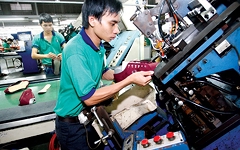
Viet Nam's international trade activities have seen explosive growth since the beginning of 2026, creating a solid foundation for the year's goals.
According to the latest figures released by the Customs Department, Viet Nam's total import and export turnover in the first half of January 2026 (from January 1st to January 15th, 2026) reached an impressive $39.25 billion. This is an exceptionally favorable start, demonstrating the strong recovery of the economy and the flexible adaptability of the business community amidst ongoing global geopolitical uncertainties. Within this overall figure, exports reached approximately $19.8 billion, while imports reached $19.45 billion, maintaining a slight trade surplus and ensuring the stability of the trade balance from the outset.
The impetus comes from free trade agreements and new orders.
The breakthrough of key export items such as electronics, computers, textiles, and footwear continues to act as the "locomotive" driving the entire export engine forward. The effective utilization of new-generation free trade agreements (FTAs) such as CPTPP, EVFTA, and RCEP has helped Vietnamese goods penetrate demanding markets with preferential tariffs. Notably, traditional markets such as the United States, China, the EU, and ASEAN have maintained double-digit growth rates, reflecting a gradual recovery in global consumer demand after a period of austerity.
According to Ms. Phan Thi Thanh Xuan, Vice President of the Viet Nam Leather and Footwear Association (LEFASO), businesses in the industry have already secured orders until the end of the second quarter of 2026. "The recovery of purchasing power from the US and Europe, along with the shift of orders from neighboring countries, has given Viet Nam a significant advantage," Ms. Xuan stated.
However, Ms. Xuan also emphasized that experts are paying particular attention to the increasingly stringent technical barriers and environmental regulations of the EU, notably the EU's Anti-Deforestation Regulation (EUDR) and the Carbon Border Adjustment Mechanism (CBAM). This requires businesses to rapidly transition to green practices in order to maintain sustainable growth.
2025 concludes with new records, affirming Viet Nam's position in the global supply chain. Total import and export turnover for the whole year of 2025 is estimated to reach approximately 800 billion USD, a growth of over 10% compared to 2024. This is the result of a strong breakthrough from the processing and manufacturing industry group, contributing more than 85% of total export turnover.
Sharing the same view on this positive trend, Mr. Nguyen Van Cong, director of a textile and garment business in Bac Thang Long, said: "Our production lines have been operating at 100% capacity since the beginning of January. The difference in 2026 is that orders are not only increasing in quantity but also have higher demands for sustainability. Our proactive approach to sourcing recycled materials from 2025 has helped the company secure high-value contracts from Nordic partners during the recent holiday." This proactive approach by textile and garment businesses shows a significant shift from contract manufacturing to responsible production, meeting global standards.
In the agricultural sector, positive signs are also spreading across the raw material producing regions. Mr. Le Minh Nam, representative of an agricultural export business in Can Tho, said: "This January, the volume of rice and fruit exports to the Chinese and Middle Eastern markets increased sharply, by about 20% compared to the same period last year. Thanks to the stable signing of official export protocols, we no longer worry about 'congestion' at the border. The goal of our business this year is to increase the proportion of deeply processed agricultural products to increase value, instead of just exporting raw products as before."
The shift from exporting raw materials to high-tech goods and deeply processed agricultural products is the most significant "legacy" left behind from 2025.
Optimizing logistics infrastructure to achieve the $1 trillion target.
According to representatives from the Import-Export Department (Ministry of Industry and Trade), the most outstanding highlight in 2025 is Viet Nam's full utilization of FTAs to expand its markets. Exports to markets with signed agreements such as the EU, the UK, and CPTPP countries all recorded double-digit growth. In particular, the trade balance in 2025 is expected to maintain a trade surplus for the 10th consecutive year, with an estimated surplus of over US$28 billion. This result not only helps stabilize the exchange rate and foreign exchange reserves but also creates extremely positive momentum for the business community entering 2026 with the goal of conquering the historic milestone of US$1 trillion.
To achieve the historic milestone of $1 trillion in import and export turnover by the end of 2026, the Government and relevant ministries have identified improving logistics capacity and port infrastructure as a key priority. Currently, key projects such as the Can Gio mega-port and the expansion of ports at Lach Huyen are being accelerated, even during the Tet holiday. Reducing logistics costs from their current level to below 15% of GDP will be a direct boost, helping Vietnamese goods become more competitive in terms of price on the international trade market, especially given the continued volatility of sea freight rates due to tensions on important shipping routes.
Leaders of Saigon Newport Corporation shared that the volume of goods passing through the port in the first weeks of the year increased dramatically, forcing units to strengthen technological solutions and accelerate the implementation of "green ports" and "smart ports" to avoid congestion. From the perspective of the Viet Nam Logistics Business Association (VLA), the harmonious coordination between road, waterway, and air transport is gradually being perfected, creating a closed and seamless supply chain.
Commenting on the results of trade activities in the early days of the year, economist Tran Du Lich highly appreciated this impressive start but also offered insightful recommendations. According to him, the figure of 39 billion USD in half a month is a positive sign, but to reach the 1 trillion USD mark, we need more than just quantitative growth.
These days, the atmosphere at border crossings and seaports across the country is extremely hectic.
"We need to boost official exports and build strong national brands so that the added value of the $1 trillion figure truly remains in the pockets of Vietnamese people and businesses," Mr. Lich emphasized. The expert also suggested that the government should continue to reform administrative procedures and further promote digital transformation in customs and specialized inspections to free up resources for businesses.
According to observations by reporters, in the early days of 2026, the atmosphere at border gates and seaports across the country is extremely bustling. At the Huu Nghi International Border Gate and ports in Hai Phong and Ho Chi Minh City, trucks carrying goods are lined up, departing from dawn. The concerted efforts of the government's macroeconomic policies and the dynamism of individual businesses are creating a positive synergy. If this pace is maintained, the target of achieving a total import and export turnover of 1,000 billion USD in 2026 is no longer just a theoretical figure, but is gradually becoming a tangible reality, affirming Viet Nam's new position on the global economic map.
Source: VTV
Các tin khác
- U.S. to Impose Duties on Mexican, Thai, Vietnamese Chassis (03/06/2026)
- Mexican sugar producers push to scrap U.S. import quotas (03/06/2026)
- Japan launched an anti-dumping investigation into flat steel imports from three countries (03/06/2026)
- Eurochem challenges anti-dumping duties in the EU (03/06/2026)
- Pangasius prices in Viet Nam surge due to high export demand (03/06/2026)