Home
Home
 About Us



Flexible export tax rates to increase the competitiveness of Vietnamese fertilizers.
29/04/2026 05:05
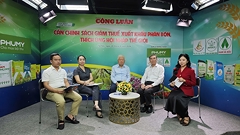
While many countries have reduced fertilizer export taxes to 0% to support businesses, Vietnam maintains a 5% rate, resulting in higher costs compared to competitors and reduced competitiveness. Experts suggest that tax policies need to be flexible to adapt to supply and demand in order to avoid missing market opportunities.
Tax policies have not kept pace with market changes.
From the beginning of 2025, a number of major fertilizer exporting countries such as China, Indonesia, Malaysia, and Middle Eastern countries have simultaneously reduced export taxes to 0%. This move aims to increase competitive advantage and expand market share in the context of recovering global demand.
Meanwhile, Vietnam maintains a 5% export tax on some key products such as urea and phosphate fertilizers. This difference makes the production costs of domestic businesses higher than those of their competitors, reducing their competitiveness in the international market.
At the online seminar "The need for policies to reduce fertilizer export taxes to adapt to global integration," organized by the Newspaper and Public Opinion, Mr. Nguyen Van Phung, a senior tax expert, stated that the fertilizer industry has a distinct seasonal nature. During peak season, demand increases significantly, even requiring additional imports; however, during off-season periods, supply is in surplus, forcing businesses to seek export markets.
This "two-way" reality demands flexible policies capable of adjusting to market cycles. However, during periods of abundant supply, the slow pace of tax policy changes has caused businesses to miss export opportunities, especially when competitors have already benefited from a 0% tax rate.
"Taxes are not only a tool for generating budget revenue, but also a tool for regulating the market. When there is a shortage of goods, taxes can be increased to restrict exports; when there is a surplus, taxes should be reduced to promote exports and release the goods," Mr. Phung analyzed.
Sharing the same view, Mr. Nguyen Tri Ngoc, Vice President of the Vietnam Fertilizer Association, said that the fertilizer industry has the unique characteristic of continuous production and large capacity, so the pressure of consumption is always present. Without appropriate policies and mechanisms, businesses will face difficulties in maintaining production efficiency.
"This necessitates an urgent shift in management thinking, towards a more flexible and adaptable policy mechanism, thereby optimizing economic efficiency and ensuring a balance of interests between production, exports, and domestic demand," Mr. Ngoc emphasized.
Reduce taxes and remove bottlenecks to increase competitiveness.
From a business perspective, Ms. Bui Thi Thanh Giang, representative of the Chemical Group, stated that the domestic fertilizer market is currently in its peak season, with low inventory levels. However, according to the annual cycle, from June to November, demand decreases sharply, causing inventory to increase rapidly.
When inventories are high, working capital is tied up, interest expenses increase, and product quality may deteriorate over time. This forces businesses to reduce capacity or operate at a reduced pace, leading to higher maintenance and repair costs.
Conversely, by taking advantage of export opportunities during the off-season, businesses can clear inventory, maintain continuous production, and reduce average costs. This leads to lower product prices, not only enhancing international competitiveness but also directly supporting domestic farmers through lower selling prices.
Notably, the Asian market, especially India, has a huge demand for fertilizers, approximately 18-20 million tons per year, with a different planting season compared to Vietnam. This presents an opportunity for businesses to boost exports at the right time, provided that support policies are sufficiently flexible.
However, the 5% export tax is becoming a significant barrier. Besides price risks due to international market fluctuations, businesses also have to bear the additional cost of taxes, while their competitors do not face similar pressure.
Therefore, many experts suggest that tax policies should be reviewed and adjusted soon to be more flexible, considering a 0% rate during periods of oversupply, in order to create a competitive advantage for businesses and boost exports.
However, taxes are not the only factor. According to Dr. Ha Huy Ngoc, the Vietnamese fertilizer industry also faces three major challenges.
Firstly , logistics costs are high. The lack of synchronized transportation and export infrastructure drives up costs, reducing competitiveness. Investing in specialized logistics infrastructure, linked to major production centers, is essential.
Secondly, there are trade barriers. Businesses must meet various technical standards while also facing the risk of trade defense investigations. This requires regulatory agencies to have mechanisms for early warning and support for businesses in managing risks.
Thirdly , there is the pressure for green transition. As a chemical industry, fertilizer production faces increasingly stringent requirements for emission reduction and compliance with environmental standards. Therefore, supportive policies regarding credit, technology, and production innovation are needed to help businesses transition towards sustainability.
According to experts, only by simultaneously removing these "bottlenecks" and perfecting flexible tax policies can the Vietnamese fertilizer industry effectively take advantage of opportunities from the international market, enhance competitiveness, and achieve sustainable long-term development.
Source: DaiBieuNhanDan
Các tin khác
- U.S. to Impose Duties on Mexican, Thai, Vietnamese Chassis (03/06/2026)
- Mexican sugar producers push to scrap U.S. import quotas (03/06/2026)
- Japan launched an anti-dumping investigation into flat steel imports from three countries (03/06/2026)
- Eurochem challenges anti-dumping duties in the EU (03/06/2026)
- Pangasius prices in Viet Nam surge due to high export demand (03/06/2026)