Home
Home
 About Us


Exports aim for $550 billion
02/02/2026 04:52
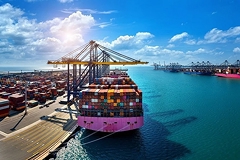
The government has set an export growth target of 15-16% for 2026, equivalent to a turnover of 546-550 billion USD. According to calculations, Viet Nam needs to achieve 45-46 billion USD in exports each month. This is a challenging goal, requiring decisive action from ministries, localities, and the business community from the very first months of the year.
Viet Nam enters the top 20 largest import and export economies in the world.
In 2025, despite adverse impacts from the international environment and complex domestic natural disasters such as storms and floods, import and export activities still achieved positive results, continuing to affirm their role as one of the important drivers of economic growth.
According to the Ministry of Industry and Trade , total import and export turnover for the year reached US$930.1 billion, an increase of 18.2% compared to 2014, placing Viet Nam among the top 20 largest economies in the world in terms of import and export volume. Of this, exports reached over US$475 billion (an increase of 17%) and imports reached over US$455 billion (an increase of 19.4%). The trade balance showed a surplus of US$20 billion, marking 10 consecutive years of trade surplus since 2016, significantly contributing to a stable source of foreign currency, reducing pressure on the exchange rate, and strengthening foreign exchange reserves.
Import and export growth rates exceeded 10% per year, and free trade agreements (FTAs) proved effective in expanding access to high-quality markets. The structure of import and export goods shifted positively, with 85% of exports being industrial goods and 90% of imports being essential goods.
According to the Ministry of Industry and Trade, alongside positive results, import and export activities are facing numerous challenges. Notable among these are the high level of dependence on a few key markets; the unbalanced structure of enterprises, with foreign-invested enterprises still accounting for an overwhelming proportion; the low added value of goods; and the lack of domestically branded products with sufficient competitiveness.
Furthermore, the supply of raw materials is not yet diversified, while the trade balance with many major partners still harbors potential imbalances. The effectiveness of exploiting FTAs is also uneven and has not met expectations.
By 2026, exports must reach $45-46 billion USD per month.
In Resolution 01/NQ-CP on socio-economic development and state budget estimates for 2026, the Government assigned a target of a 15-16% increase in total export turnover.
According to calculations by the Import-Export Department, to achieve the growth target set in Resolution 01/NQ-CP, total export turnover for the year needs to reach approximately 546-550 billion USD. This means that, on average, Viet Nam must export 45-46 billion USD per month. This is a challenging goal, requiring the utmost effort from all sectors, localities, and businesses from the very beginning of the year.
Sharing his perspective on the coffee industry, Mr. Le Duc Huy, Vice President of the Viet Nam Coffee and Cocoa Association, stated that the industry's challenge in 2026 is not whether to repeat record growth, but rather to maintain sustainable development. Price only reflects part of the picture; more importantly, it's about businesses' ability to adapt to increasingly stringent market standards.
In fact, when regulations prohibiting deforestation were implemented, domestic coffee businesses quickly coordinated with associations and the banking system to establish standardized growing areas, digitize agricultural maps, and strengthen links with farmers. This proactive approach is creating a new competitive advantage for Vietnamese coffee in the international market.
However, a paradox remains: export revenue of approximately $8 billion is still quite modest when placed within the global food and beverage value chain. The main reason is the high proportion of raw material exports, while the capacity for deep processing, logistics infrastructure, and warehousing systems in major raw material regions such as the Central Highlands remain limited, making it difficult for businesses to increase value and improve their negotiating position.
Dr. Can Van Luc, Chief Economist of BIDV and Member of the Prime Minister's Policy Advisory Council, also believes that the export growth target of 15-16% in 2026 is very challenging, as current forecasts lean towards 12-14%.
Sharing his proposed solutions, Dr. Can Van Luc emphasized the need to diversify markets and effectively utilize FTAs; promote the export of services, especially logistics and tourism. Along with this, he stressed the importance of improving trade promotion effectiveness, building national brands, fostering public-private partnerships in market development, and accelerating digital transformation in international trade through e-commerce and B2B trading platforms to support small and medium-sized enterprises in accessing customers more effectively. Logistics infrastructure also needs to be prioritized for investment in a green and sustainable direction.
From a financial perspective, he proposed expanding access to credit for domestic businesses, establishing a credit guarantee fund for export businesses; implementing preferential credit packages, boosting import-export financing and supply chain financing. Simultaneously, he suggested developing green credit for high-tech agricultural projects and renewable energy, improving tax policies and tax refunds, and establishing an export credit insurance mechanism to reduce risks for businesses and banks.
Regarding enhancing competitiveness, the focus is on increasing added value, shifting towards in-depth production and processing, raising the localization rate, and participating more deeply in global value chains. Simultaneously, priority is given to developing supporting industries, strategic technologies, and high-tech products linked to building and protecting brands in international markets; concentrating resources on forming large enterprises in key sectors such as semiconductors, AI, and green energy, while increasing linkages with the small and medium-sized enterprise (SME) sector.
Source: People's Deputies News
Các tin khác
- U.S. to Impose Duties on Mexican, Thai, Vietnamese Chassis (03/06/2026)
- Mexican sugar producers push to scrap U.S. import quotas (03/06/2026)
- Japan launched an anti-dumping investigation into flat steel imports from three countries (03/06/2026)
- Eurochem challenges anti-dumping duties in the EU (03/06/2026)
- Pangasius prices in Viet Nam surge due to high export demand (03/06/2026)