Home
Home
 About Us



EU Steel Tariff Plan: Sharp criticism from public society
13/10/2025 02:57
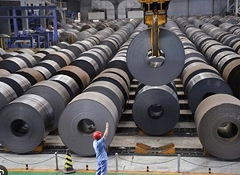
Criticism of the recently presented EU Steel Tariff Plan is mounting rapidly. Is France behind the idea that tariff-rate quotas should primarily benefit large corporations? Is the EU’s proposed Melt and Pour rule even feasible? Meanwhile, India launches an anti-dumping investigation into stainless steel.
Stainless steel: India launches anti-dumping investigation
India has initiated an anti-dumping investigation on imports of flat-rolled stainless steel from China, Indonesia and Vietnam. The investigation, launched on 29 September 2025 by the Directorate General of Trade Remedies (DGTR), formally covers cold-rolled flat products of stainless steel 300 and 400 series. However, the tariff codes listed also include hot-rolled products, effectively extending the scope to the entire spectrum of stainless flat steel.
EU Steel Tariff Plan: Sharp criticism from public society
The European Commission’s proposed Steel Tariff Plan has already faced substantial criticism even before its publication. Not only did the German daily FAZ highlight its potentially severe economic consequences in a detailed article, but several major industry associations have also spoken out strongly against it – including the Federation of German Industries (BDI), the German Electrical and Electronic Manufacturers’ Association (ZVEI), and the Association of Steel and Metal Processing Industries (WSM).
Academic voices, such as from the Leibniz Centre for European Economic Research (ZEW), have also warned against the plan, expressing concern over the Commission’s proposal to raise general steel tariffs from 0% to 50% and to introduce tariff-rate quotas, calling the approach economically risky and politically short-sighted.
Think tank questions feasibility of implementation
The European economic think tank Bruegel has also voiced strong doubts about whether the proposed Steel Tariff Plan is even implementable. According to Bruegel, the Commission would have to renegotiate or break all of the EU’s free trade agreements in order to introduce permanent quotas.
European carmakers firmly oppose EU plan
The European Automobile Manufacturers’ Association (ACEA), representing the continent’s automotive industry, distanced itself sharply from the Commission’s proposals shortly after their presentation. According to ACEA, car manufacturers alone would consume 14% of the proposed 18.3 million tonnes quota.
European SMEs once again deprived of competitiveness
Carmakers state that around 10% of their annual steel demand must be imported into the EU, as it cannot be sourced domestically. If this ratio is applied across all industries, over 92% of the proposed quota, roughly 17 million tonnes, would be consumed by large corporations alone.
This would leave small and medium-sized enterprises (SMEs) in the manufacturing sector, many of which depend on affordable imported steel, at a severe competitive disadvantage, effectively destroying what remains of their market viability.
EU Steel Tariff Plan drafted in France
The Commission’s regulatory draft appears to be based almost word-for-word on a 2025 letter from the French government, supported by some other EU member states, calling for higher tariffs and quotas. Despite repeated warnings addressed to the French Executive Vice-President for Prosperity and Industrial Strategy, Stéphane Séjourné, he appears to have ignored them entirely.
Why, of all countries, France (which continues to stumble from one political crisis to another, has driven its economy into stagnation, and now carries over €3 trillion in public debt, the highest in the EU) was allowed to take the lead in pushing through yet another blow to Europe’s economy remains an open question.
EU Melt and Pour rule likely unworkable
The Commission’s proposal to introduce a Melt and Pour rule directly conflicts with more than 70 existing EU trade agreements. Rules of origin have been clearly defined and consistently applied for decades.
Clearly defined rules of origin
For example, the Decision No. 1/2023 of the Joint Committee of the Regional Convention on Pan-Euro-Mediterranean Preferential Rules of Origin explicitly sets out when and how a product changes its origin. If, for instance, a slab (semi-finished product of iron or non-alloy steel, 7207) from Vietnam is processed into a hot-rolled coil (flat-rolled product of iron or non-alloy steel, 7208) in Turkey, the resulting product obtains Turkish origin under the preferential rules of origin.
It is highly unlikely that the countries participating in this convention would agree to any such revision. The EU would therefore have no choice but to unilaterally terminate its trade agreements, effectively ending European free trade and potentially triggering multiple trade wars.
Source: Steel News
Các tin khác
- U.S. to Impose Duties on Mexican, Thai, Vietnamese Chassis (03/06/2026)
- Mexican sugar producers push to scrap U.S. import quotas (03/06/2026)
- Japan launched an anti-dumping investigation into flat steel imports from three countries (03/06/2026)
- Eurochem challenges anti-dumping duties in the EU (03/06/2026)
- Pangasius prices in Viet Nam surge due to high export demand (03/06/2026)