Home
Home
 About Us



Durian exports resume smoothly following temporary testing bottlenecks
05/11/2025 03:24
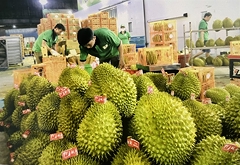
Việt Nam currently has 24 laboratories recognised by China’s General Administration of Customs (GACC) for durian testing, with a combined capacity of around 3,200 samples per day, sufficient to meet current demand.
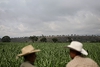
Việt Nam’s durian exports have returned to normal after a short-lived disruption caused by laboratory testing bottlenecks, restoring smooth customs clearance and consumption for producers and exporters, particularly in the Central Highlands as the durian season ends.
Earlier in October, congestion was reported in several key durian-growing provinces, including Đắk Lắk, after multiple testing laboratories temporarily suspended operations for maintenance or capacity re-evaluation.
The pause prevented exporters from completing mandatory analyses for Cadmium — a heavy metal that can accumulate in soil — and Yellow O, a dye banned from agricultural use. Both indicators are essential for obtaining export certificates to China.
The testing delays briefly disrupted customs procedures and sparked concern among farmers and exporters. In response, on October 24, Deputy Minister of Agriculture and Environment Hoàng Trung convened an urgent meeting with relevant agencies, instructing facilities to review operations, ensure transparency in testing capacity and maintain alignment with Chinese standards.
He emphasised that testing must be conducted quickly and accurately to avoid discrepancies that could lead to goods being rejected.
According to Huỳnh Tấn Đạt, Director General of the ministry's Plant Production and Protection Department, Việt Nam currently has 24 laboratories recognised by China’s General Administration of Customs (GACC) for durian testing, with a combined capacity of around 3,200 samples per day — sufficient to meet export demand.
Following a week of intensive coordination and oversight, testing operations have fully resumed, laboratories have extended working hours and customs clearance is now proceeding at normal pace.
“Our goal is to ensure that no shipments are interrupted due to testing or technical procedures,” Đạt said.
Durian exports at major border gates have stabilised, with 300 to 400 trucks clearing customs daily — including 200 to 250 at Lạng Sơn, 100 to 150 at Lào Cai, and around 50 at Móng Cái.
Đạt added that domestic durian output was declining as the harvest season nears completion and urged businesses and authorities to maintain market stability, avoid panic and work closely with relevant agencies to address any emerging issues.
To sustain export efficiency, the Ministry of Agriculture and Environment has directed departments to reassess laboratory capacity, deploy expert support to localities and mobilise qualified testing facilities to handle remaining sample analyses.
These measures aim to protect export continuity and safeguard production across roughly 150,000 hectares of durian plantations, which are expected to yield more than 1.5 million tonnes in 2025.
Source: Việt Nam News
Các tin khác
- U.S. to Impose Duties on Mexican, Thai, Vietnamese Chassis (03/06/2026)
- Mexican sugar producers push to scrap U.S. import quotas (03/06/2026)
- Japan launched an anti-dumping investigation into flat steel imports from three countries (03/06/2026)
- Eurochem challenges anti-dumping duties in the EU (03/06/2026)
- Pangasius prices in Viet Nam surge due to high export demand (03/06/2026)