Home
Home
 About Us



Australian tariff fight brews on Chinese ‘dumping’
16/01/2026 04:42
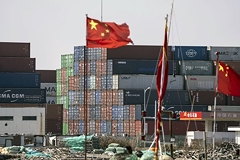
Chinese Communist Party subsidised companies are allegedly dumping hundreds of millions of dollars worth of vital construction material into the Australian market at prices that undercut local competitors, sparking a clash between local manufacturers and the building industry.
Australian manufacturers have called on the government to introduce a 20 to 54 per cent tariff on Chinese building products to allow them to remain competitive against cheap imports.
But the Master Builders Association said tariffs were a bad idea that would make it harder for Labor to reach its target of 1.2 million new homes by 2030.
“A tariff would ultimately be borne by the home buyer and the broader community and should not be taken lightly,” MBA chief executive Denita Wawn said on Friday.
The Anti-Dumping Commission launched an investigation into the claims by Australian suppliers that Chinese companies were selling cheap tariff-free glass windows and doors into Australia, and in an interim report in November said there were “reasonable grounds” to support the claims.
Dumping is the unfair trade practice where a company exports its products at heavily discounted prices below its normal value to offload unwanted stock and undercut local competition in another country.
Chinese companies are responsible for the majority of investigations by the Anti-Dumping Commission. The Chinese manufacturing industry is the largest in the world and heavily subsidised by the Chinese government.
Australian Glass and Windows Association chief executive Clinton Skeoch said he was calling for a 20 to 54 per cent dumping duty to address the problem. “All we’re after is a fair and level playing field,” he said.
The Albanese government last year shifted responsibility for investigating suspicious surges of imports from the free-market Productivity Commission to the more protectionist Anti-Dumping Commission.
The move was slammed by former Productivity Commission boss Peter Harris as reflective of the influence US President Donald Trump, who was proving that governments could get away with imposing restrictive tariffs to shelter domestic industries from overseas competition.
The Anti-Dumping Commission’s latest investigation has attracted more than 400 submissions from businesses, unions and industry groups.
The majority are part of a co-ordinated effort by Australian building material suppliers supporting the dumping claims by Ventora Group and the AGWA.
Their claims have put them at odds with the MBA, which says trade barriers for building materials would jeopardise Labor’s National Housing Accord target of building 1.2 million new homes by 2030, which is already behind schedule. The government fell short by 66,000 homes in the plan’s first year.
“It will only serve to exacerbate current conditions by disrupting supply chains, creating material shortages and increasing costs,” Wawn said.
The cost of building materials has risen 37.9 per cent since the start of the pandemic, and window and door-related costs have grown even higher. Those made using timber rose 70.6 per cent, and aluminium rose 38.8 per cent.
“This has been one of the reasons why building and construction output has become so much more expensive since the pandemic,” Wawn said.
The MBA’s submission said Australia lacked the domestic manufacturing capability to meet demand from the construction industry, a gap that had been filled by cheaper Chinese imports.
Skeoch pushed back, saying the industry had met global shortages for windows and doors in the past, such as during the pandemic.
“Australia has a robust fabrication network from small family businesses up to very large corporates that cover supply of windows for all the sectors and building classes,” he said.
The Anti-Dumping Commission sits in the portfolio of Industry Minister Tim Ayres, who last year announced bailouts totalling more than $3 billion to manufacturing industry giants Glencore and Rio Tinto.
A spokesperson for Ayres said the minister would not comment until the commission’s investigations had ended.
Global trade barriers exploded last year due to Trump’s tariff blitz, which included a 10 per cent baseline rate on Australia and the rest of the world. Trump had also threatened tariff rates as high as 135 per cent on China, which have since settled at 20 per cent.
Treasurer Jim Chalmers has previously been open to trade liberalisation, abolishing about 1000 tariffs that impose administrative burdens on businesses while collecting little revenue for the budget.
The MBA said a tariff on glass windows and doors would be at odds with the Albanese government’s criticism of Trump over its tariff policies and could risk retaliation from China.
The Albanese government resolved trade disputes with China two years ago, succeeding in having tariffs lifted on Australia’s $20 billion in exports of wine, beef, barley and timber, which stemmed from former prime minister Scott Morrison’s call for an investigation into the origins of the COVID-19 virus.
Source: Financial Review
Các tin khác
- U.S. to Impose Duties on Mexican, Thai, Vietnamese Chassis (03/06/2026)
- Mexican sugar producers push to scrap U.S. import quotas (03/06/2026)
- Japan launched an anti-dumping investigation into flat steel imports from three countries (03/06/2026)
- Eurochem challenges anti-dumping duties in the EU (03/06/2026)
- Pangasius prices in Viet Nam surge due to high export demand (03/06/2026)