Home
Home
 About Us



Agricultural exports to China: Adapting to retain the market
02/02/2026 04:49
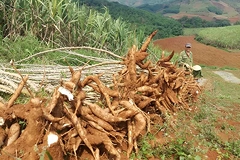
Changes in the Chinese market are placing export businesses under urgent pressure, requiring proactive adaptation and early standardization to avoid being excluded from the supply chain.
There's no more room for a "wait until the last minute" mentality.
At the meeting "Viet Nam's Cassava Supply Chain: Current Situation and Challenges," the story of the cassava industry highlighted a clear requirement: Exports no longer rely on existing advantages, but depend on the extent to which the standards of importing markets are met. Those who adapt first will retain their market share.
China remains the primary market for Viet Nam's cassava industry. With over 140 large-scale processing plants, even requiring the import of raw materials, the cassava industry has a clear advantage in terms of scale and processing capacity. However, this heavy reliance on a single market also makes businesses vulnerable to rapid changes in technical and legal requirements.
Based on production and export practices, according to Mr. Ho Xuan Hieu - Chairman of the Board of Directors of Quang Tri Trading Corporation (Sepon Group), new regulations on food safety, processing enterprise management, and traceability are being continuously updated by importing markets. Meanwhile, in many businesses, there is still a certain delay in accessing information, correctly understanding regulations, and translating them into internal processes.
"Just one failure in one step can disrupt the entire export chain. The important thing is that if businesses don't proactively prepare early, it will be very difficult to cope in a short time when problems arise," Mr. Ho Xuan Hieu shared.
In reality, many businesses are still accustomed to old ways of doing things, producing and exporting based on experience and handling issues on a case-by-case basis. Meanwhile, the new approach of import markets focuses on systems, compliance history, and long-term risk control. This "mismatch" is the reason why many businesses are confused when regulations change.
Standardize from within to avoid being left out of the "game".
Observations from practice show that changes in China's import policy are not sudden, but follow a fairly clear roadmap and trend, shifting from administrative management to risk-based management, and from batch-by-batch control to assessment of the entire production and processing system.
Speaking with a reporter from the Industry and Trade Newspaper, Dr. Ngo Xuan Nam, Deputy Director of the SPS Viet Nam Office, stated that many current concerns stem from a lack of clear distinction in the scope of application of the new regulations. In reality, regulations such as Decree 280 of the General Administration of Customs of China focus on processed food and agricultural products, and do not change the management mechanism for fresh agricultural products, which is already regulated by bilateral protocols.
A notable point is the risk-based management approach. Accordingly, businesses with a good compliance history and clear, transparent food safety systems will be classified as low-risk and benefit from more favorable mechanisms, such as automatic renewal of their certification numbers. Conversely, businesses lacking standardization and employing a "firefighting" management style will face greater risks when audited.
From this perspective, the new regulations are not a "barrier," but rather a test of a company's management capabilities. The issue is not whether the regulations are strict or lax, but rather how quickly or slowly businesses can adapt.
For the cassava industry, where over 90% of exports go to China, adaptation is becoming increasingly urgent. If businesses do not soon standardize processes, complete legal documentation, build a traceability system, and implement a systematic food safety management system, the risk of export disruption is unavoidable.
Based on practical experience and policy analysis, many experts believe that instead of simply waiting for guidance when problems arise, businesses need to proactively "take a step ahead" in meeting the requirements of import markets.
Specifically, for processed products, a thorough review of all business registration documents, the validity of registration numbers, and legal information on the importing authority's system is a minimum requirement. Furthermore, standards such as HACCP and ISO 22000 should not only be met but also implemented effectively, linked to risk management at each stage of production.
In the raw material supply chain, controlling growing areas, linking with farmers, and ensuring transparency in input sources are key factors. In the context of increasing importance placed on traceability, any "grey areas" in the production chain can become a negative point when assessing risks.
At the macro level, experts also believe that the coordinating and guiding role of regulatory agencies needs to be strengthened so that businesses understand, do things correctly, and act consistently. However, this support will only be effective when businesses proactively receive it and translate it into concrete actions.
According to Dr. Ha Cong Tuan, Chairman of the Viet Nam Association of Agricultural Economics and Rural Development, the principle of the market is "sell what the market needs, not just what we have." Therefore, businesses and industries need to proactively improve their compliance capacity and standardize production and processing procedures to adapt to new requirements. This is not only a short-term solution but also a condition for the sustainable development of the cassava industry in the long term.
Looking at the broader picture, the story of the cassava industry is not an isolated case, but reflects a general trend in Viet Nam's agricultural exports. As major markets increasingly raise their standards, only businesses that proactively prepare and invest systematically in management and compliance systems can survive. The market doesn't wait for businesses to adapt. Experts believe that in the export "game," proactiveness is always the most important competitive advantage.
Source: Industry and Trade News
Các tin khác
- U.S. to Impose Duties on Mexican, Thai, Vietnamese Chassis (03/06/2026)
- Mexican sugar producers push to scrap U.S. import quotas (03/06/2026)
- Japan launched an anti-dumping investigation into flat steel imports from three countries (03/06/2026)
- Eurochem challenges anti-dumping duties in the EU (03/06/2026)
- Pangasius prices in Viet Nam surge due to high export demand (03/06/2026)