Home
Home
 About Us


Watchdog Raps USTR For Opaque China Tariff Exclusions
30/07/2021 05:19
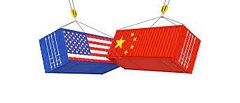
When the Trump administration began heaping tariffs on Beijing in 2018, it also established a system for importers to get certain goods excluded. USTR denied 87% of those requests, and the U.S. Government Accountability Office uncovered inconsistencies in USTR's review process.
The GAO's report faulted USTR for not sufficiently documenting each request's journey through the agency's review system. Specifically, the GAO said that the agency did not fully document its internal procedures at each step of the process.
"Federal internal control standards state that agencies should document their procedures to ensure they conduct them consistently and effectively, and to retain knowledge," the GAO said in its report. "Without fully documented internal procedures, USTR lacks reasonable assurance it conducted its reviews consistently."
The business community has sharply criticized the tariffs on China imposed during the Trump administration and maintained by President Joe Biden. The exclusion process was set up to soften the blow of the additional duties for importers who could not source their goods domestically, but many importers have complained about a lack of transparency.
The GAO's review of certain exclusion request case files at least partially backed those concerns. Among other shortcomings, the GAO found that USTR did not document how its reviewers should consider multiple exclusion requests from the same company. The watchdog also found case files that lacked documentation explaining the agency's final decision on whether to waive a tariff.
For now, the GAO's critique of the exclusion process is mostly academic, as USTR closed the tariff exclusion window at the end of December. A sweeping China bill passed by the Senate in June would restart the process with new transparency requirements, but the legislation has stalled in the House.
A USTR spokesman told Law360 that the agency "embraces the recommendations in the report and intends to fully document all internal procedures used in the exclusion processes."
Nicole Bivens Collinson, who lobbies on behalf of importers at Sandler Travis & Rosenberg PA, said the GAO's report underscores importers' "exasperation" with the tariff exclusion procedures.
"We are not surprised by the GAO findings regarding USTR's failure to provide a transparent and level playing field with respect to the approval process," she wrote in an email to Law360. "While 'kudos' should be given to USTR for instituting some type of exclusion process, we need to recognize that USTR's function is not classification, domestic production or in-depth industry knowledge."
Instead, Collinson said that exclusion decisions should be handled by the U.S. International Trade Commission, or the process should be overhauled by Congress to operate with more clarity and certainty.
The Biden administration is in the midst of a broader review of U.S. policy toward China, which will include a decision on how to proceed with the tariffs on more than $300 billion worth of goods. Treasury Secretary Janet Yellen said last week that the levies have "hurt American consumers."
Grunfeld Desiderio Lebowitz Silverman & Klestadt LLP partner Ned Marshak, who has assisted numerous importers with tariff exclusion requests, said that the GAO report generally aligns with his experience, but that "the best solution would be to eliminate" the China tariffs altogether.
Source: Law360
Các tin khác
- Viet Nam extends anti-dumping duties on some Thai sugar products to 2031 (05/06/2026)
- Hong Kong: Ministry of Commerce Rules on Inheritance of Anti-dumping Duty Rates for Copolymer Polyoxymethylene Imports Originating from S Korea, Thailand and Malaysia (05/06/2026)
- Early-season Vietnamese lychees conquer US consumers (05/06/2026)
- Global rubber prices surge, raising hopes for Vietnamese exporters (05/06/2026)
- Modern logistics creates new growth opportunities for Lang Son’s border-gate economy (05/06/2026)