Home
Home
 About Us



USMCA Panel Backs Canada In US Solar Panel Tariff Dispute
16/02/2022 11:12
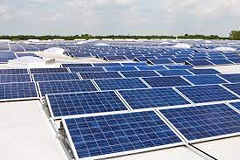
The panel overseeing Canada's challenge to safeguard tariffs on its U.S. solar panel imports found that the duties ran afoul of the United States-Mexico-Canada agreement and were heavily based on speculation, according to a report released Tuesday.
President Donald Trump included Canadian solar panel imports in safeguard measures starting in 2018, before the USMCA took effect, despite the U.S. International Trade Commission's recommendation that they be spared under Section 201 of the Trade Act of 1974.
The former president should have listened, according to the panel, which held in its Feb. 1 report that the federal government had satisfied neither of the requirements for imposing emergency trade measures against a fellow USMCA signatory. Namely, the U.S. had failed to show that Canadian solar imports accounted for either a "substantial share" of damaging imports, or that Canada's solar panels had played a significant role in a trade injury.
"The United States' claim that Canada's imports 'contributed importantly' to the serious injury rested primarily on an impermissible inclusion of a potential for a surge in imports as part of its assessment of the contribution of current imports to the serious injury," the panel found.
While Canada had exported an increasing number of solar panels and components to the U.S. beginning in 2012, it had started from "virtually zero," leading to a skewed presentation of the trade data, in which Canada showed a large growth in solar exports without ever ranking any higher than seventh among solar exporters to the U.S. during the period of investigation.
Generally, only the top five trade partners in a given sector are considered to provide a "substantial share" of imports, the report says.
Concerns that Canada's growing production capacity and access to the U.S. market could cause a surge in imports were also not a solid foundation for emergency tariffs, the panel said, highlighting the existence of tools to address such surges in the USMCA — provided the surge had actually occurred.
"The panel finds that the United States is not entitled to forego the procedural requirements of the anti-surge mechanism by a post-hoc rationalization that the entire process would provide 'belated relief.'" the panel concluded. "Nor is the United States entitled to achieve the results of the application of the anti-surge mechanism — the inclusion of Canada in the safeguard measures — without meeting the required pre-requisites."
The panel also brushed aside a threshold argument from the U.S. asserting that it had no jurisdiction to hear Canada's claims, since the tariffs were established before the USMCA was created.
Canada's Minister of Small Business, Export Promotion and International Trade Mary Ng celebrated the panel's findings in a statement Tuesday that emphasized her appreciation of the Biden administration's plans to modify the levies.
"We welcome the United States' intention to pursue a resolution with Canada and Mexico, as indicated by the president in his recent announcement. It has been made clear today in the [USMCA] dispute settlement panel's report that tariffs on Canadian solar products are in violation of [USMCA]. Canada will work toward the complete removal of these unjustified tariffs," she said.
On Feb. 4, the White House announced the renewal of the safeguards for another four years, but with important carveouts excluding double-sided solar panels and doubling import quotas. The proclamation also directed the office of the U.S. Trade Representative to engage with Canada and Mexico to possibly exclude them from the tariffs.
In a statement to Law360, a USTR spokesperson emphasized that the panel had "reaffirmed the president's authority to make exclusion determinations in safeguard proceedings."
"We will continue to review the report and work with Canada to resolve the dispute," the office said Tuesday.
Source: Law360
Các tin khác
- Viet Nam extends anti-dumping duties on some Thai sugar products to 2031 (05/06/2026)
- Hong Kong: Ministry of Commerce Rules on Inheritance of Anti-dumping Duty Rates for Copolymer Polyoxymethylene Imports Originating from S Korea, Thailand and Malaysia (05/06/2026)
- Early-season Vietnamese lychees conquer US consumers (05/06/2026)
- Global rubber prices surge, raising hopes for Vietnamese exporters (05/06/2026)
- Modern logistics creates new growth opportunities for Lang Son’s border-gate economy (05/06/2026)