Home
Home
 About Us



US and EU reach metals tariff truce to focus on mutual rival China
22/05/2021 12:00
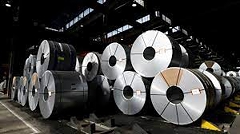
The U.S. and the European Union agreed this week to resume talks on lifting American steel and aluminum tariffs in a step toward resolving trade tensions as both sides see a more pressing challenge in China.
Washington and Brussels promised to refrain from further tariff hikes while negotiations are in progress, shelving an EU plan to double retaliatory duties on American goods to 50% on June 1.
Former U.S. President Donald Trump in 2018 imposed tariffs on products from a wide swath of countries amid a flood of imports driven by overproduction in China and elsewhere. Brussels was incensed by 25% tariffs on imports of European steel and 10% on aluminum, moving to slap retaliatory tariffs on American products.
Now President Joe Biden is trying to rebuild relations with the EU as he seeks to work with allies in containing China.
The U.S. and EU "can partner to promote high standards, address shared concerns and hold countries like China that support trade-distorting policies to account," the two sides said in a joint statement after Monday's meeting.
But while Washington and Brussels appear aligned on Beijing for now, both sides face arduous negotiations. Whether the two sides will be able to actually agree on dropping the tariffs remains an open question.
Biden must walk a fine line in mending ties with the EU and keeping his supporters happy. Steel workers in Rust Belt states form an important part of Biden's political base, and cutting tariffs on European steel, even if it is to focus more narrowly on China, could risk a backlash.
The American Iron and Steel Institute, an industry group, on Monday welcomed the talks with the EU but urged the administration to maintain the "necessary trade measures to prevent surges in steel imports that could quickly undermine the U.S. industry and our national security."
The United Steelworkers union called for a tough stance in negotiations. "The EU is an important ally, but in the past, it has been part of the problem, not part of the solution" as an exporter of cheap steel, the group said.
And even if the two sides can reach a resolution by year-end as hoped, the issue extends well beyond the U.S. and Europe.
Anti-dumping duties and other barriers have already cut into American steel imports from China, which accounted for just 1.8% of the total by volume last year, according to Commerce Department data. While Germany ranked fifth at 4%, it was outpaced by Canada, Brazil, Mexico and South Korea.
Wendy Cutler, a former acting deputy U.S. trade representative and a vice president at the Asia Society Policy Institute, suggested the EU negotiations could serve as a steppingstone.
"Based on the joint U.S.-EU announcement, it seems that both sides will work to tackle the core problem of steel and aluminum global overcapacity instead of maintaining the ineffective and controversial tariffs," she said. "A deal with the EU could pave the way for a similar arrangement with Japan and others."
Washington does not appear to be planning a complete about-face from its protectionism under the previous administration, even on this issue.
U.S. Trade Representative Katherine Tai offered some positive words about the steel and aluminum tariffs last week while calling for more modern tools to address the glut.
Her predecessor, Robert Lighthizer, and the Trump administration "did the best that they could, given the tools that we have existing on the books," Tai argued.
Washington and Brussels promised to refrain from further tariff hikes while negotiations are in progress, shelving an EU plan to double retaliatory duties on American goods to 50% on June 1.
Former U.S. President Donald Trump in 2018 imposed tariffs on products from a wide swath of countries amid a flood of imports driven by overproduction in China and elsewhere. Brussels was incensed by 25% tariffs on imports of European steel and 10% on aluminum, moving to slap retaliatory tariffs on American products.
Now President Joe Biden is trying to rebuild relations with the EU as he seeks to work with allies in containing China.
The U.S. and EU "can partner to promote high standards, address shared concerns and hold countries like China that support trade-distorting policies to account," the two sides said in a joint statement after Monday's meeting.
But while Washington and Brussels appear aligned on Beijing for now, both sides face arduous negotiations. Whether the two sides will be able to actually agree on dropping the tariffs remains an open question.
Biden must walk a fine line in mending ties with the EU and keeping his supporters happy. Steel workers in Rust Belt states form an important part of Biden's political base, and cutting tariffs on European steel, even if it is to focus more narrowly on China, could risk a backlash.
The American Iron and Steel Institute, an industry group, on Monday welcomed the talks with the EU but urged the administration to maintain the "necessary trade measures to prevent surges in steel imports that could quickly undermine the U.S. industry and our national security."
The United Steelworkers union called for a tough stance in negotiations. "The EU is an important ally, but in the past, it has been part of the problem, not part of the solution" as an exporter of cheap steel, the group said.
And even if the two sides can reach a resolution by year-end as hoped, the issue extends well beyond the U.S. and Europe.
Anti-dumping duties and other barriers have already cut into American steel imports from China, which accounted for just 1.8% of the total by volume last year, according to Commerce Department data. While Germany ranked fifth at 4%, it was outpaced by Canada, Brazil, Mexico and South Korea.
Wendy Cutler, a former acting deputy U.S. trade representative and a vice president at the Asia Society Policy Institute, suggested the EU negotiations could serve as a steppingstone.
"Based on the joint U.S.-EU announcement, it seems that both sides will work to tackle the core problem of steel and aluminum global overcapacity instead of maintaining the ineffective and controversial tariffs," she said. "A deal with the EU could pave the way for a similar arrangement with Japan and others."
Washington does not appear to be planning a complete about-face from its protectionism under the previous administration, even on this issue.
U.S. Trade Representative Katherine Tai offered some positive words about the steel and aluminum tariffs last week while calling for more modern tools to address the glut.
Her predecessor, Robert Lighthizer, and the Trump administration "did the best that they could, given the tools that we have existing on the books," Tai argued.
Source: Nikkei
Các tin khác
- Viet Nam extends anti-dumping duties on some Thai sugar products to 2031 (05/06/2026)
- Hong Kong: Ministry of Commerce Rules on Inheritance of Anti-dumping Duty Rates for Copolymer Polyoxymethylene Imports Originating from S Korea, Thailand and Malaysia (05/06/2026)
- Early-season Vietnamese lychees conquer US consumers (05/06/2026)
- Global rubber prices surge, raising hopes for Vietnamese exporters (05/06/2026)
- Modern logistics creates new growth opportunities for Lang Son’s border-gate economy (05/06/2026)