Home
Home
 About Us



Philippines: Is the Safeguard Duty imposed on all cars?
14/05/2021 12:00
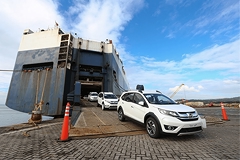
The question comes up because easily one of the biggest issues earlier this year was the Bureau of Customs’ (BOC) imposition of safeguard duties on imported completely built up (CBU) vehicles.
The move is meant to discourage the importation of completely-built vehicles into the country, which take advantage of various free trade agreements to be sold at competitive prices. These in turn may be affecting Filipino buyers’ preferences, steering them toward imported products rather than one of the few remaining Filipino built and assembled vehicles. If left unchecked, this could lead to a loss of jobs and the end of auto assembly in the Philippines.
The Safeguard Duty puts a P70,000 cash bond on imported passenger cars and P110,000 cash bond on pickups or SUVs. While there are a few exceptions, this Safeguard Duty affects majority of the imported cars in the country. Worse still, this duty is imposed for 200 days from February 1, 2021. That means it expires sometime in August.
So does this make all cars automatically more expensive by P70,000- P110,000? Not quite. Keen to recover from a dismal year, many car brands have thoroughly pored through the stipulations of the Safeguard Duty memo.
Exemptions
The duties primarily are aimed at large volume vehicles made in countries like Thailand and Indonesia. Unfortunately, these are were we get a large number of models from (pickups, SUVs, and MPVs).
However, there are exemptions for specific kinds of vehicles from specific countries. For example, commercial vehicles from China are exempt from this rule. As such, the Maxus T60, a pickup made in China has no safeguard duty at all. The same goes for some Mazda and Peugeot models which are made in Malaysia. Small cars like the Suzuki Dzire, Swift and Jimny, made in India, are also exempt. As you can imagine, luxury vehicles are also exempt. After all, they have a higher luxury tax imposed.
Discounted duty
While clearly intended to penalize the vehicle importer rather than the car buyer, it’s not surprising that many brands have opted to pass on this additional expense to the consumer. With dismal sales last year and the need to virtually overhaul the way they work, most are already stretched thin by unexpected expenses.
Nonetheless, a few are still biting the bullet and absorbing some of it. In the case of Honda, rather than asking for the full amount, customers are only asked to pay anywhere from an additional P7,000 to as high as P60,000. That’s certainly a much more agreeable amount.
Refund?
Perhaps the most intriguing interpretation, is the possibility of a refund. How does this work? The Safeguard Duty is put in place while the Tariff Commission (TC) conducts a formal investigation to determine if there indeed is a causal link between surge in importation and serious injury to the domestic industry.If the TC comes up with a positive determination, the safeguard measure becomes permanent and could be implemented for more than three years. If not, than the Safeguard Duty is lifted.
Optimistically, brands like Toyota and Isuzu have begun banking on the fact that it might be lifted. In their case, Safeguard Duty amount is requested from clients at purchase. They will then be issued separate receipts for these. If the Tariff Commissionrules in favor of car brands, the clients are refunded the amount.
No increase
Quite fortuitously for some brands, they still have enough stocks to serve market needs. As such, you’ll likely see some showrooms with large banners proclaiming no price increase. Either their vehicles are exempt, or they are taking on another risk: not replenishing inventory. The Safeguard Duty, after all, is applied on vehicles that arrive in the country during the 200-day period. Any vehicle that has come before or after that is exempt. With car sales going slower than usual, it shouldn’t come as no surprise that many brands still have lots of stocks. As such, they’re simply opted to wait this storm out and simply order again later in the year.
If this situation should teach anything to car buyers, it’s that they should be more aware of where their cars are coming from. That will certainly be key to getting a good deal or not, and perhaps even convince you to change your mind about vehicles built in China or India. Or, why not buy Filipino? The Toyota Innova, Vios, Mitsubishi Mirage G4, Mitsubishi L300, FotonToplander and Hyundai H350 are all proudly built on local soil.
The move is meant to discourage the importation of completely-built vehicles into the country, which take advantage of various free trade agreements to be sold at competitive prices. These in turn may be affecting Filipino buyers’ preferences, steering them toward imported products rather than one of the few remaining Filipino built and assembled vehicles. If left unchecked, this could lead to a loss of jobs and the end of auto assembly in the Philippines.
The Safeguard Duty puts a P70,000 cash bond on imported passenger cars and P110,000 cash bond on pickups or SUVs. While there are a few exceptions, this Safeguard Duty affects majority of the imported cars in the country. Worse still, this duty is imposed for 200 days from February 1, 2021. That means it expires sometime in August.
So does this make all cars automatically more expensive by P70,000- P110,000? Not quite. Keen to recover from a dismal year, many car brands have thoroughly pored through the stipulations of the Safeguard Duty memo.
Exemptions
The duties primarily are aimed at large volume vehicles made in countries like Thailand and Indonesia. Unfortunately, these are were we get a large number of models from (pickups, SUVs, and MPVs).
However, there are exemptions for specific kinds of vehicles from specific countries. For example, commercial vehicles from China are exempt from this rule. As such, the Maxus T60, a pickup made in China has no safeguard duty at all. The same goes for some Mazda and Peugeot models which are made in Malaysia. Small cars like the Suzuki Dzire, Swift and Jimny, made in India, are also exempt. As you can imagine, luxury vehicles are also exempt. After all, they have a higher luxury tax imposed.
Discounted duty
While clearly intended to penalize the vehicle importer rather than the car buyer, it’s not surprising that many brands have opted to pass on this additional expense to the consumer. With dismal sales last year and the need to virtually overhaul the way they work, most are already stretched thin by unexpected expenses.
Nonetheless, a few are still biting the bullet and absorbing some of it. In the case of Honda, rather than asking for the full amount, customers are only asked to pay anywhere from an additional P7,000 to as high as P60,000. That’s certainly a much more agreeable amount.
Refund?
Perhaps the most intriguing interpretation, is the possibility of a refund. How does this work? The Safeguard Duty is put in place while the Tariff Commission (TC) conducts a formal investigation to determine if there indeed is a causal link between surge in importation and serious injury to the domestic industry.If the TC comes up with a positive determination, the safeguard measure becomes permanent and could be implemented for more than three years. If not, than the Safeguard Duty is lifted.
Optimistically, brands like Toyota and Isuzu have begun banking on the fact that it might be lifted. In their case, Safeguard Duty amount is requested from clients at purchase. They will then be issued separate receipts for these. If the Tariff Commissionrules in favor of car brands, the clients are refunded the amount.
No increase
Quite fortuitously for some brands, they still have enough stocks to serve market needs. As such, you’ll likely see some showrooms with large banners proclaiming no price increase. Either their vehicles are exempt, or they are taking on another risk: not replenishing inventory. The Safeguard Duty, after all, is applied on vehicles that arrive in the country during the 200-day period. Any vehicle that has come before or after that is exempt. With car sales going slower than usual, it shouldn’t come as no surprise that many brands still have lots of stocks. As such, they’re simply opted to wait this storm out and simply order again later in the year.
If this situation should teach anything to car buyers, it’s that they should be more aware of where their cars are coming from. That will certainly be key to getting a good deal or not, and perhaps even convince you to change your mind about vehicles built in China or India. Or, why not buy Filipino? The Toyota Innova, Vios, Mitsubishi Mirage G4, Mitsubishi L300, FotonToplander and Hyundai H350 are all proudly built on local soil.
Source: Manila Bulletin
Các tin khác
- Viet Nam extends anti-dumping duties on some Thai sugar products to 2031 (05/06/2026)
- Hong Kong: Ministry of Commerce Rules on Inheritance of Anti-dumping Duty Rates for Copolymer Polyoxymethylene Imports Originating from S Korea, Thailand and Malaysia (05/06/2026)
- Early-season Vietnamese lychees conquer US consumers (05/06/2026)
- Global rubber prices surge, raising hopes for Vietnamese exporters (05/06/2026)
- Modern logistics creates new growth opportunities for Lang Son’s border-gate economy (05/06/2026)