Home
Home
 About Us



Agriculture is ‘unpredictable sector’ in Sino-U.S. trade
06/10/2021 05:30
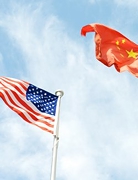
The United States will press China to live up to its commitments in the “phase one” agreement, said U.S. trade representative Katherine Tai on Monday in unveiling the Biden administration’s “strategic vision for re-aligning trade policies toward China.” During a speech at a Washington think tank, Tai said agricultural trade was an “unpredictable sector” given Chinese willingness to intervene in the market.
China was forecast to buy record amounts of U.S. farm and food exports this year, boosting U.S. farm income. Even so, its purchases would be far below the lofty targets written into phase one — more than $40 billion this year, for example. Ag trade has been volatile; exports to China plunged to $9.2 billion in 2018 after President Trump started the trade war, and soared to $26.4 billion in 2020 after phase one was signed.
“It is increasingly clear that China’s plans do not include meaningful reforms to address the concerns that have been shared by the United States and many other countries,” said Tai in a review of the bilateral trade relationship. China subsidizes industries such as steel and photovoltaic cells, and imposes one-sided policies on intellectual property.
“U.S. agriculture has not been spared either,” said Tai. “While we have seen more exports to China in recent years, market share is shrinking and agriculture remains an unpredictable sector for U.S. farmers and ranchers who have come to rely heavily on this market. China’s regulatory authorities continue to deploy measures that limit or threaten the market access for our producers — and their bottom line.”
The first step in the Biden strategy will be discussions over China’s performance under the phase one agreement, signed at the White House in mid-January 2020, said Tai. “China made commitments that benefit certain American industries, including agriculture, that we must enforce.”
Other steps include raising America’s “serious concerns about China’s state-centered and non-market trade practices that were not addressed in the phase one deal.” The administration will initiate a “targeted tariff exclusion process” for businesses that face a financial crunch but need materials from China for their products. Fourth on Tai’s list was to “work with allies to shape the rules for fair trade in the 21st century.”
During the speech and a discussion that followed at the Center for Strategic and International Studies, Tai put the onus on China to be forthcoming about its trade intentions. She refused to discuss future steps by the administration on China trade, saying the upcoming discussions will inform U.S. policy.
Besides holding China to its commitments on phase one, Tai will “reiterate that the United States will defend itself, using all available tools, from state-directed industrial policies that harm our workers, producers, and overall economic interests,” said a senior administration official.
High U.S. tariffs on imported goods from China, imposed by Trump, remain in place eight months into President Biden’s tenure. Similarly, China has high retaliatory tariffs on a broad range of U.S. goods, including agricultural goods. “Americans have paid more than $90 billion in tariffs since the trade war began,” said the Consumer Technology Association, in asking for removal of the U.S. tariffs.
It was “absolutely appropriate” for the administration to focus on phase one’s results, said Agriculture Secretary Tom Vilsack in a teleconference. China acted on 50 of the 57 regulatory issues identified in the agreement, leaving “seven very big ones” on the table. If China adhered to the agreement fully, he said, there would be faster approvals of imports of GE crops grown in the United States, and larger exports.
“I think it is essential that we look to diversify our [export] efforts,” he said when asked about Tai’s assessment of ag trade with China being “an unpredictable sector.”
U.S dairy groups said retaliatory tariffs suppress sales in China, and that U.S. market share in cheese and dry milk sales lagged other nations.
China failed to meet its target for purchases of U.S. food, agriculture, and seafood by more than $6 billion last year, and through August had purchased $17.9 billion of the $40.4 billion that is this year’s goal, based on U.S. export data, said the Peterson Institute for International Economics. The gap is larger when measured by import data at Chinese ports — $12 billion last year and imports of $27.5 billion during the first eight months of the year toward a goal of $43.6 billion. “As set out in the legal agreement, one 2017 baseline scenario allows for use of U.S. export statistics and the other allows for Chinese import statistics.”
Source: Agriculture
Các tin khác
- Viet Nam extends anti-dumping duties on some Thai sugar products to 2031 (05/06/2026)
- Hong Kong: Ministry of Commerce Rules on Inheritance of Anti-dumping Duty Rates for Copolymer Polyoxymethylene Imports Originating from S Korea, Thailand and Malaysia (05/06/2026)
- Early-season Vietnamese lychees conquer US consumers (05/06/2026)
- Global rubber prices surge, raising hopes for Vietnamese exporters (05/06/2026)
- Modern logistics creates new growth opportunities for Lang Son’s border-gate economy (05/06/2026)